What Is an FRP Integrated Pump Station? The Direct Answer
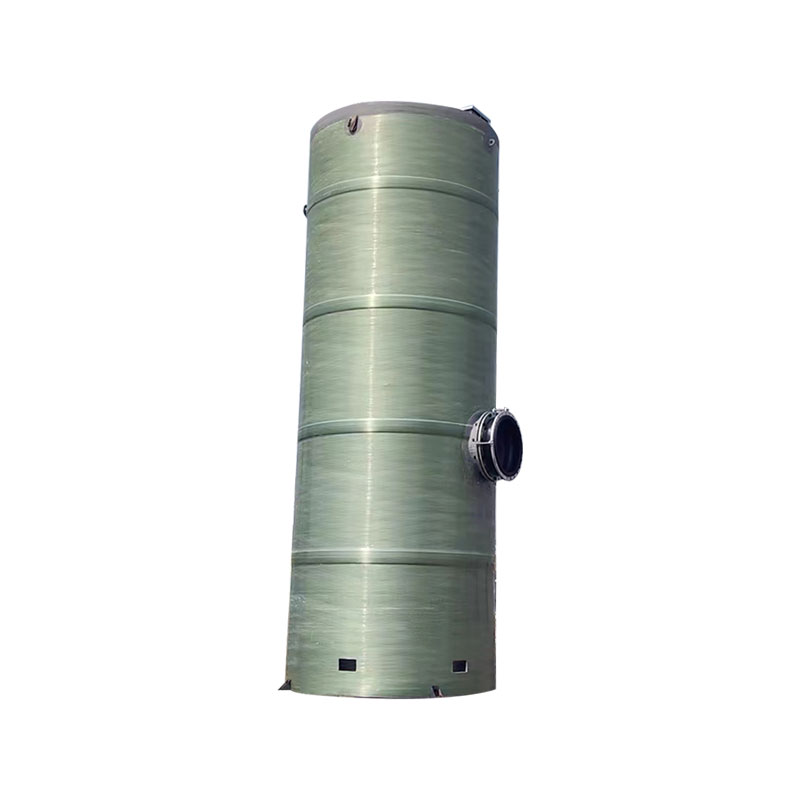
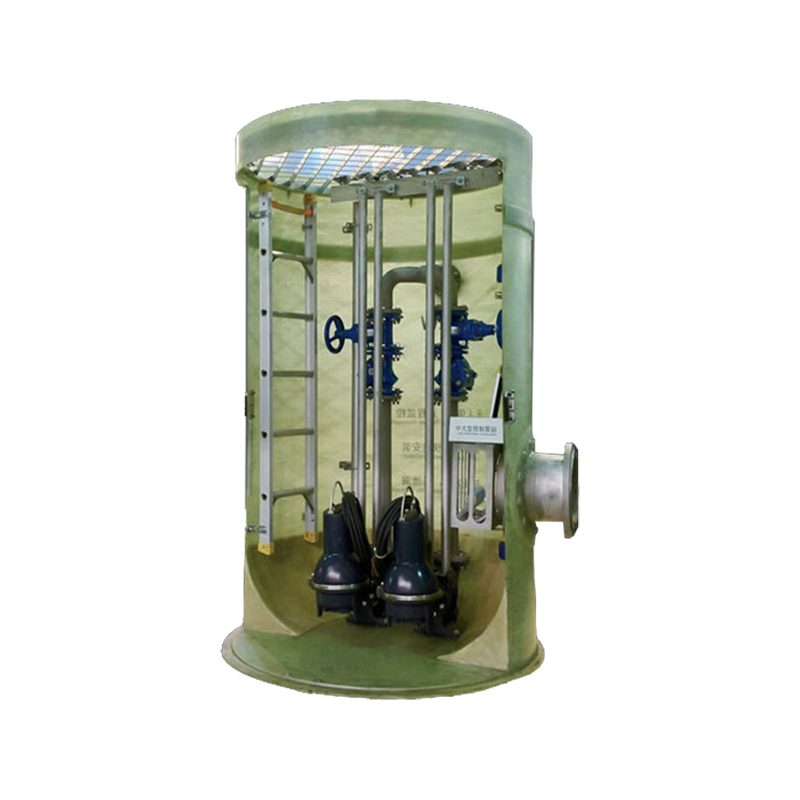
An FRP integrated pump station is a factory-prefabricated wastewater or stormwater lifting system built inside a fiberglass-reinforced plastic (FRP) tank, with the pumps, piping, valves, level sensors, and control panel all installed and tested before the unit ever reaches the job site. The key benefit is that it arrives as one complete, ready-to-install unit instead of requiring a poured concrete wet well built on-site over several weeks.
In practical terms, if a project needs to lift sewage, effluent, or stormwater from a low point to a higher gravity line or treatment plant, and the site has limited construction time or poor soil access for concrete work, an FRP integrated pump station is almost always the faster and more cost-predictable solution.
Why FRP Is Used Instead of Concrete or Steel
Pump station tanks have traditionally been built from cast concrete or coated steel, but FRP has become the preferred material for prefabricated stations for several measurable reasons.
- Corrosion resistance: FRP does not rust or corrode from hydrogen sulfide gas, which is one of the leading causes of concrete and steel wet well failure in sewage applications.
- Lightweight installation: an FRP tank weighs roughly one-quarter to one-third of an equivalent concrete structure, allowing installation with smaller cranes and less site disturbance.
- Watertight by design: the seamless molded or wound construction eliminates the joint leaks common in segmented concrete wet wells.
- Long service life: properly manufactured FRP tanks typically carry a design life of 30-50 years in buried wastewater service.
- Faster installation: because the station is pre-tested at the factory, on-site installation often takes 1-3 days compared to several weeks for poured concrete.
Key Components Inside an Integrated Pump Station
FRP Tank Shell
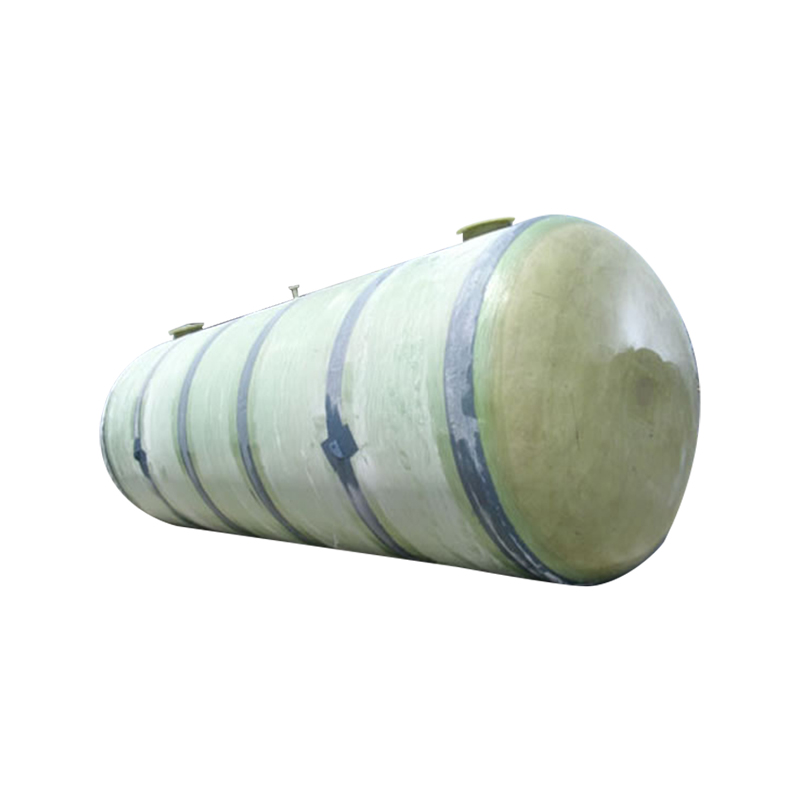
The tank is typically manufactured by filament winding or hand lay-up, producing a cylindrical structure rated for both internal hydrostatic pressure and external soil and groundwater loads once buried.
Submersible Pumps
Most stations use two submersible pumps in a duty/standby configuration, so that if one pump fails or is removed for service, the second pump automatically continues operation without interrupting flow.
Guide Rail and Lifting System
Pumps are mounted on guide rails with an auto-coupling base, allowing them to be lifted straight up for maintenance without anyone entering the confined space of the tank.
Level Control Sensors
Float switches, ultrasonic sensors, or pressure transducers monitor liquid level and trigger pump start/stop sequences and high-level alarms.
Control Panel
A factory-wired panel houses the motor starters, alternation logic for duty/standby pumps, alarm beacon, and often a telemetry module for remote monitoring.
Valve Chamber
Isolation and check valves are typically housed in a separate accessible chamber or valve pit above ground, allowing maintenance without confined space entry into the wet well itself.
How the Pump Station Operates
- Wastewater or stormwater flows by gravity into the FRP wet well through an inlet pipe.
- Level sensors detect when liquid reaches the pump start setpoint and activate the duty pump.
- The pump lifts the liquid through the discharge piping and check valve into the force main or gravity outlet.
- Once the level drops to the stop setpoint, the pump shuts off, and the system alternates to the standby pump on the next cycle to balance wear between units.
- If liquid rises above the high-level setpoint due to a fault, the control panel triggers an audible/visual alarm and, where fitted, a remote notification.
Capacity and Sizing Options
FRP integrated pump stations are manufactured across a wide range of tank diameters and pump capacities to match flow requirements from a single household to a small community.
Typical FRP pump station sizing ranges and matching applications
| Tank Diameter |
Typical Flow Capacity |
Common Application |
| 1.0-1.5 m |
Up to 20 m³/h |
Single homes, small commercial buildings |
| 1.5-2.5 m |
20-100 m³/h |
Apartment complexes, small subdivisions |
| 2.5-4 m |
100-400 m³/h |
Municipal lift stations, light industrial sites |
| 4 m+ |
400+ m³/h |
Regional sewage networks, stormwater pumping |
FRP Stations vs Traditional Concrete Pump Stations
Engineers and contractors comparing the two construction methods should weigh installation speed and lifecycle cost against upfront budget assumptions.
Comparison between FRP integrated pump stations and traditional concrete pump stations
| Factor |
FRP Integrated Station |
Concrete Pump Station |
| Installation time |
1-3 days |
2-6 weeks |
| Corrosion resistance |
Excellent, immune to H2S attack |
Vulnerable without protective lining |
| Weight |
Light, smaller crane required |
Heavy, requires large equipment |
| Watertightness |
Seamless, factory-tested |
Joint sealing required, higher leak risk |
| Site disruption |
Minimal, quick excavation and drop-in |
Extended, formwork and curing time |
Common Applications
Municipal Sewage Lift Stations
Cities use FRP stations to lift sewage from low-lying neighborhoods to higher gravity mains or treatment plants, particularly where flat terrain makes gravity-only systems impractical.
Residential and Commercial Developments
Housing estates and commercial buildings built below the level of the main sewer line rely on small to mid-sized FRP stations to pump wastewater up to the connection point.
Stormwater and Flood Control
Larger-diameter FRP stations with high-flow pumps are installed at drainage low points to move stormwater into retention basins or rivers during heavy rainfall events.
Industrial Effluent Transfer
Factories use chemically resistant FRP stations to transfer process effluent to on-site treatment systems, taking advantage of FRP's resistance to a wide range of industrial chemicals.
Advantages and Drawbacks of FRP Integrated Pump Stations
Summary of the main benefits and limitations of FRP integrated pump stations
| Advantages |
Drawbacks |
| Fast installation, often under a week |
Higher per-unit material cost than basic concrete |
| Excellent corrosion and chemical resistance |
Tank can be damaged by sharp impact during handling |
| Factory-tested, consistent quality control |
Requires proper anchoring against buoyancy in high water tables |
| Low lifecycle maintenance due to seamless tank |
Large diameters may need special transport arrangements |
Installation and Anchoring Considerations
Because FRP tanks are lightweight, they require specific measures to prevent flotation or shifting once buried, especially in areas with a high water table.
- Excavate to the depth and diameter specified in the manufacturer's installation drawing, allowing adequate clearance for backfill compaction.
- Pour a concrete base slab or use anchor straps to resist buoyant uplift forces, which can exceed the empty tank's weight in saturated soil.
- Backfill in even layers using granular material, compacting gradually to avoid distorting the tank shape during placement.
- Connect inlet, discharge, and vent piping per the factory layout, then pressure-test pipe joints before final backfilling.
- Commission the control panel and run a full pump cycle test before commissioning the station for live service.
Maintenance Requirements for Long-Term Reliability
Even with a maintenance-free tank shell, the mechanical and electrical components inside require routine servicing to keep the station running reliably.
- Pump inspection: lift and inspect pumps for impeller wear and seal condition every 6-12 months, depending on solids content in the wastewater.
- Level sensor checks: clean float switches or ultrasonic sensors regularly to prevent grease and debris from causing false readings.
- Check valve testing: verify check valves seal properly to prevent backflow and pump short-cycling.
- Control panel testing: test alarm functions and duty/standby alternation logic quarterly to confirm the backup pump activates correctly during a fault.
- Odor and vent system checks: inspect carbon filters or vent stacks where odor control is fitted, since blocked vents can cause pressure buildup in the tank.
How to Choose the Right FRP Pump Station
- Calculate peak flow rate and total dynamic head first, since these two figures determine the required pump model and tank diameter.
- Confirm the application type, sewage, stormwater, or industrial effluent, since solids content affects required pump type, such as vortex or grinder pumps.
- Check the site's groundwater level and specify appropriate anti-buoyancy measures with the supplier before installation.
- Verify the control panel includes duty/standby alternation, high-level alarm, and remote monitoring if the site is unmanned.
- Request factory test reports and warranty terms for both the tank shell and the mechanical/electrical components before finalizing the purchase.



 Tiếng Việt
 عربى
عربى Get a quote

 Tel: +86 0515-86302568
  E-mail:
  Add: No. 11, Xingwang Road, Jianyang Town, Jianhu County, Jiangsu Province, China