The Direct Answer: What a Stainless Steel Sectional Water Tank Is Built For
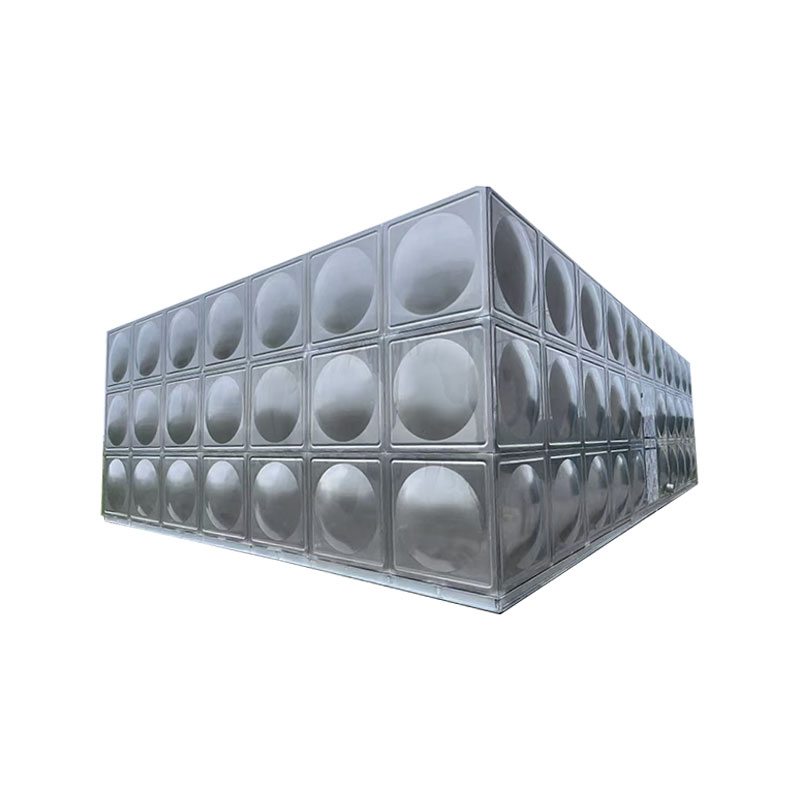
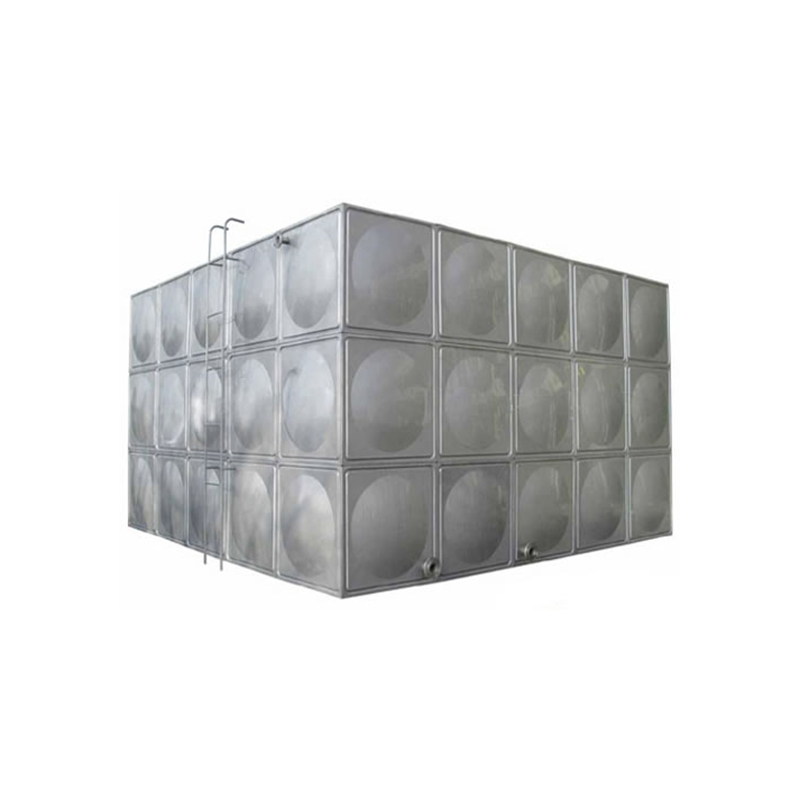
A stainless steel sectional water tank is a modular water storage structure assembled on-site from bolted or welded stainless steel panels, typically SS304 or SS316 grade, offering a design life of over 100 years with minimal maintenance and no risk of the internal rust or corrosion that limits carbon steel alternatives. It is the standard choice wherever hygiene, longevity, and resistance to chloride exposure matter more than upfront material cost — potable water storage, hospitals, hot water systems, and coastal or industrial sites among them.
Panels are manufactured in a small number of standard sizes — 1.22m × 1.22m, 1m × 1m, 1m × 0.5m, and 0.5m × 0.5m — and bolted or welded together on-site into tanks ranging from a fraction of a cubic meter up to several thousand cubic meters. This modular format is what separates a sectional tank from a single-piece welded vessel, and it's the reason sectional tanks can be fitted through doorways, up stairwells, and onto rooftops where a pre-built tank could never physically arrive.
Standard Panel Sizes and What They Allow You to Build
Because every panel in a sectional tank is a repeatable, standardized unit, capacity and footprint can be scaled up or down simply by adding or removing panels — the same panel sizes are used to assemble tanks anywhere from 0.125 m³ to 5,000 m³. This is the core practical advantage of the sectional format over a custom-fabricated single-piece tank: the manufacturing tooling doesn't change, only the quantity of panels ordered.
Standard stainless steel sectional tank panel dimensions and typical thickness tolerance
| Panel Size |
Typical Use |
| 1.22m × 1.22m |
Large-capacity commercial and industrial tanks |
| 1m × 1m |
Standard mid-size building water storage |
| 1m × 0.5m |
Tight rooftop or restricted-access installations |
| 0.5m × 0.5m |
Small domestic or confined-space applications |
Wall thickness is manufactured to a standard tolerance of 0.25mm — a panel specified at 3mm typically measures closer to 2.75mm in practice — so specifying the required thickness should account for this tolerance rather than assuming the nominal figure is guaranteed exactly.
Choosing Between SS304, SS316, and SS444 Grades
The grade of stainless steel determines how the tank will perform against corrosion over its service life, and choosing the wrong grade for the water quality and environment is the single most common specification error on a sectional tank order. The three grades used in sectional tanks differ primarily in molybdenum content, which is what drives their resistance to chlorides.
- SS304: Resists corrosion from a wide range of chemicals and suits general liquid storage and fresh water. It's the least costly option but more prone to oxidation over time than SS316 or SS444.
- SS316: Maximizes corrosion resistance due to its high molybdenum content, making it suitable for harsh environments such as seawater treatment plants and coastal sites.
- SS444: Offers the same corrosion resistance as SS316 at a lower price point, making it a cost-effective middle option where SS316-level resistance is needed but budget is tight.
A practical threshold worth applying: if the stored or surrounding water carries over 500 ppm of chlorides — common near the coast or on industrial sites — stainless steel in general, and SS316 specifically, becomes the safer long-term investment over galvanized alternatives, since it needs no internal lining or recoating cycle to maintain that resistance.
Bolted vs Welded Assembly: Which Connection Method to Specify
Sectional stainless steel tanks are assembled using one of two connection methods, and the choice affects installation speed, maintainability, and long-term watertightness differently enough that it's worth specifying deliberately rather than defaulting to whichever a supplier quotes first.
Bolted (Flanged) Assembly
Panels are joined with stainless steel bolts and sealed with gaskets at each flange, the same general appearance and structure as a hot-dip galvanized panel tank. This method allows individual panels to be unbolted and replaced later if damaged, without disturbing the rest of the structure — a meaningful advantage for tanks in hard-to-access locations where a full rebuild would be costly.
Welded Assembly
Panels are joined using butt welding, with welding wire matched to the panel material — SS304 wire for SS304 panels, SS316L wire for SS316L panels — plus fillet welding via specialized machines for larger tank runs. Welded seams eliminate the gasket as a potential failure point entirely, which is why welded construction is often specified for fire water tanks and other applications where long-term seal integrity under minimal inspection matters more than future repairability.
Height, Capacity, and Structural Reinforcement Limits
Standard sectional stainless steel tanks reach a maximum height of 6 to 6.5 meters, and installations above 5.5 meters require additional external C-channel reinforcement to manage the hydrostatic pressure a taller water column places on the lower panel rows. This threshold matters at the design stage — a tank planned close to the reinforcement boundary should account for the added structural cost and slightly larger footprint the C-channel bracing requires.
Within these height limits, capacity scales from as little as 1 cubic meter up to roughly 3,000 to 5,000 cubic meters depending on manufacturer, purely by adding panel rows and columns — the same reason the sectional format suits everything from a single-story residential building's water supply to a large industrial facility's fire reserve on the same underlying panel system.
Standards and Certifications to Verify Before Ordering
A stainless steel sectional tank intended for potable water should carry documentation against a specific set of standards, not just a general claim of "food grade" quality. Tanks manufactured to BS1564:1975 and SS22:1979, complying with AWWA D103 and certified to NSF61, are recognized with a design life of more than 100 years — a figure worth requesting in writing rather than accepting as a marketing claim.
Key certifications relevant to stainless steel sectional water tanks
| Standard |
What It Confirms |
| NSF/ANSI 61 |
Tank components are safe for drinking water contact |
| BS1564 / SS22 |
Panel tank design and structural performance benchmarks |
| AWWA D103 |
Factory-coated bolted steel tank construction standard |
| ISO 9001 |
Manufacturer follows a documented quality management process |
Under NSF/ANSI 61, the joints and gaskets — not the panel material itself — are the most common point of certification failure on a bolted tank, since sealants and gasket materials must independently be rated for potable water contact. When requesting certification, ask specifically whether the scope covers the complete assembly, including fasteners and sealants, or the stainless steel panels alone.
Why Choose Stainless Steel Over Galvanized or GRP Sectional Tanks
Stainless steel is one of three materials commonly used in the same sectional, bolted-panel format — the others being hot-dip galvanized carbon steel and GRP (glass-reinforced plastic). The decision between them comes down to how much corrosion resistance the application actually needs, weighed against upfront cost.
- Galvanized steel costs less upfront and works well for irrigation, rainwater harvesting, or fire protection in moderate climates, but relies on a sacrificial zinc coating that eventually depletes and may require an internal NSF-61 lining in aggressive environments.
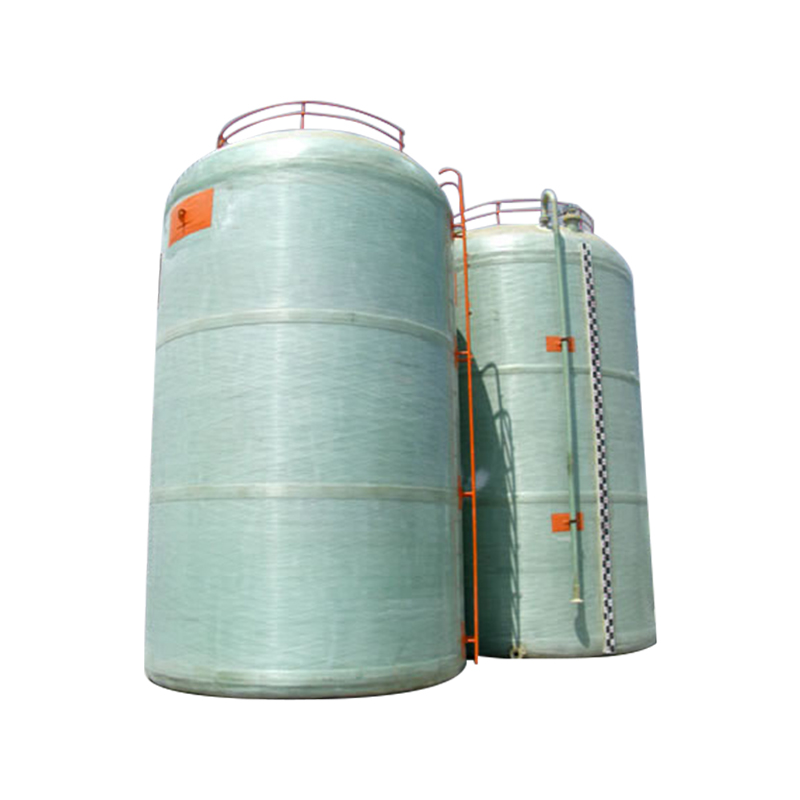
- GRP/FRP panel tanks are lighter, resist UV and impact well, and offer good thermal insulation, but are more brittle under heavy impact than stainless steel and can be prone to gradual UV degradation of the resin without protective coatings.
- Stainless steel carries the highest material cost of the three but needs no internal lining, no recoating cycle, and no UV-protective treatment — the corrosion resistance is intrinsic to the metal itself rather than a coating applied over a less resistant base material.
For applications where hygiene is paramount — hospitals, food and beverage production, hot water systems — stainless steel's non-porous surface is a further practical advantage: bacteria and algae have no surface texture to colonize, unlike coated or lined alternatives where a scratch or coating failure can expose a growth site.
Common Applications by Industry
The combination of hygiene, corrosion resistance, and modular scalability puts stainless steel sectional tanks across a wide range of building and industrial uses, though the specific grade and connection method chosen typically shifts with the application.
- Potable water storage: Domestic and municipal drinking water supply, where NSF61 certification and food-grade SS304/316 are standard requirements.
- Fire protection reserves: Sprinkler and hydrant water storage for commercial buildings, where welded construction is often preferred for long-term seal reliability under infrequent inspection.
- Hospitals and healthcare facilities: Where the non-porous, bacteria-resistant surface directly supports infection-control requirements.
- Heating system expansion and condensate tanks: Where the tank must tolerate elevated temperatures without degrading, a condition that rules out several plastic and coated alternatives.
- Coastal and industrial sites: Where high chloride exposure in the air or water supply makes SS316's molybdenum-driven corrosion resistance the deciding factor over cost.



 Tiếng Việt
 عربى
عربى Get a quote

 Tel: +86 0515-86302568
  E-mail:
  Add: No. 11, Xingwang Road, Jianyang Town, Jianhu County, Jiangsu Province, China