The three main types of water tanks are polyethylene (plastic) tanks, fiberglass (GRP) tanks, and steel tanks — with steel tanks further divided into welded steel and stainless steel sectional designs. Each type serves a distinct range of applications based on capacity, installation environment, budget, and water quality requirements. Among all options, stainless steel sectional tanks have become the preferred solution for municipal, commercial, and industrial water storage due to their modular assembly, hygienic surface properties, structural strength, and long service life exceeding 30 years. This guide explains all three types in depth and shows precisely where stainless steel sectional tanks outperform alternatives.
The Three Main Types of Water Tanks at a Glance
Before examining each type in detail, the table below provides a direct comparison across the most decision-relevant criteria.
Comparison of the three primary water tank types across key selection criteria
| Criteria |
Polyethylene (Plastic) |
Fiberglass (GRP) |
Stainless Steel Sectional |
| Typical capacity range |
100L – 50,000L |
500L – 500,000L |
1,000L – 3,000,000L+ |
| Service life |
10–20 years |
20–30 years |
30–50+ years |
| Potable water suitability |
Food-grade grades only |
With NSF-61 lining |
Excellent (Grade 304/316) |
| Installation method |
Single-piece delivery |
Single-piece or sectional |
On-site panel assembly |
| Expandability |
No |
Limited |
Yes — add panels on site |
| UV resistance |
Moderate (degrades) |
Good with gel coat |
Excellent |
| Maintenance requirement |
Low |
Medium |
Low |
Type 1: Polyethylene (Plastic) Water Tanks
Polyethylene tanks are manufactured through a rotational moulding (rotomoulding) process that produces seamless, one-piece containers in a wide range of shapes and sizes. They are the most widely used tank type for small to medium residential and agricultural applications due to their low upfront cost and ease of transport.
Advantages of Polyethylene Tanks
- Low cost: A 5,000-litre polyethylene tank typically costs 40–60% less than an equivalent-capacity steel or GRP tank.
- Lightweight and easy to transport; no crane required for smaller units.
- Naturally corrosion-resistant; no internal lining needed for most water types.
- Available in food-grade formulations certified to NSF/ANSI 61 for potable water.
Limitations of Polyethylene Tanks
- UV radiation degrades the polymer over time, causing brittleness and micro-cracking — particularly in outdoor installations above ground.
- Capacity is effectively capped at around 50,000 litres due to structural and manufacturing constraints.
- Cannot be repaired in the field; a cracked tank typically requires full replacement.
- Not suitable for storing hot water above approximately 50°C without deformation.
- Some grades may leach plasticisers or impart taste/odour over long periods if not properly certified.
Polyethylene tanks are best suited for residential rainwater harvesting, small-scale irrigation, and chemical storage where capacity demands are modest and budget is the primary constraint.
Type 2: Fiberglass (GRP) Water Tanks
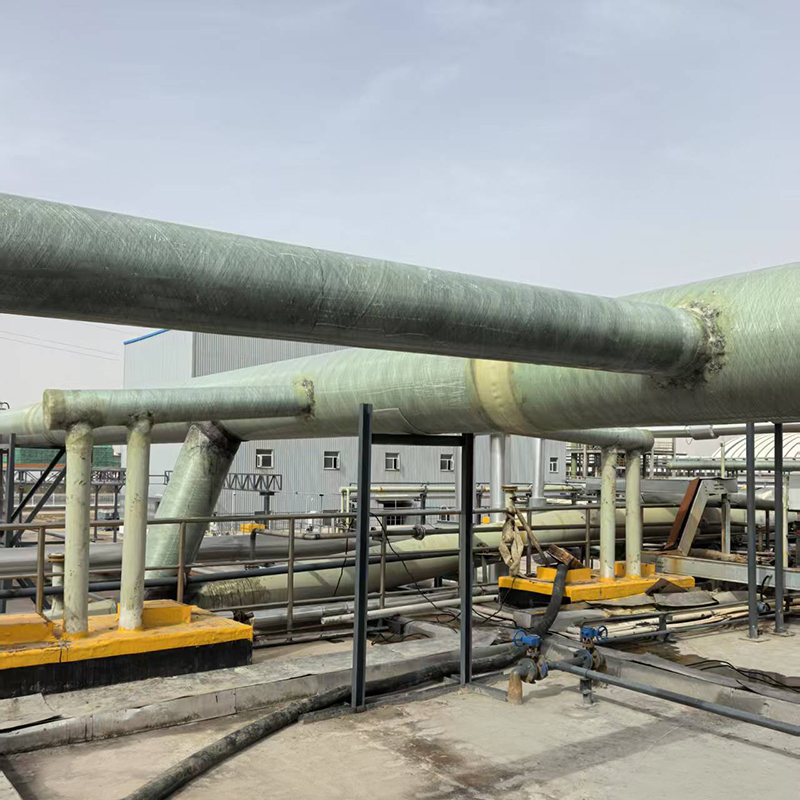
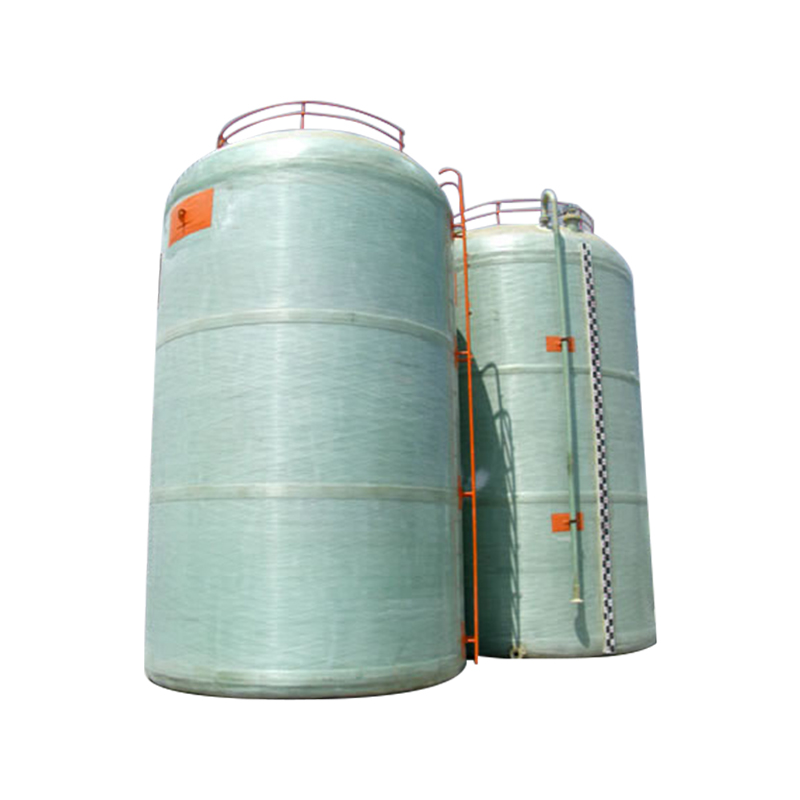
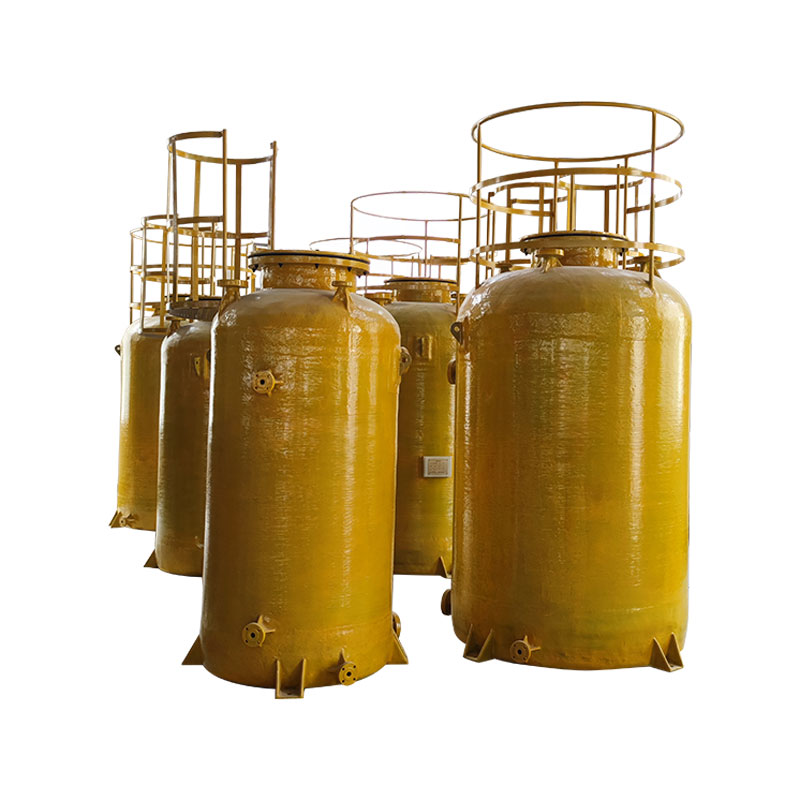
Glass Reinforced Plastic (GRP) tanks are manufactured by laminating layers of fiberglass mat with polyester or epoxy resin. The resulting composite structure offers an excellent strength-to-weight ratio and good resistance to a wide range of chemicals. GRP tanks can be produced as single monolithic units or as sectional panel systems, giving them greater flexibility than polyethylene at larger capacities.
Advantages of GRP Tanks
- Excellent chemical resistance — suitable for storing aggressive liquids that would corrode mild steel.
- Lighter than steel at equivalent structural strength, reducing foundation load requirements.
- Available in sectional form for installation through restricted access points such as basements or plant rooms.
- Can be manufactured with UV inhibitors and gel coats for outdoor use.
Limitations of GRP Tanks
- Gel coat and inner liner degradation can occur over 15–20 years, introducing fine particles into stored water and requiring inspection and relining.
- Vulnerable to impact damage — a significant blow can cause delamination that is not always visible externally.
- Sectional GRP joints use rubber gaskets that require periodic replacement to maintain watertightness.
- Resin components may not meet potable water standards without specific NSF-61 certified inner laminate layers.
GRP tanks are widely used in commercial building water supply, fire suppression systems, and industrial chemical storage where their chemical compatibility and mid-range capacity make them a practical choice.
Type 3: Steel Water Tanks — and Why Stainless Steel Sectional Tanks Lead the Category
Steel water tanks divide into two distinct subtypes: mild steel (carbon steel) tanks, which require internal epoxy or bitumen coatings to prevent corrosion, and stainless steel tanks, which are inherently corrosion-resistant. Within stainless steel, the sectional panel construction method has become the dominant design for large-capacity applications due to its unique combination of on-site assembly flexibility and structural integrity.
Mild Steel vs. Stainless Steel Water Tanks
Mild steel tanks are lower in upfront material cost but require protective coatings that must be inspected and reapplied every 5–10 years. Coating failure leads to rust contamination of stored water — a critical problem in potable water applications. Stainless steel eliminates the coating entirely, making it the standard of choice for drinking water storage worldwide.
What Is a Stainless Steel Sectional Tank?
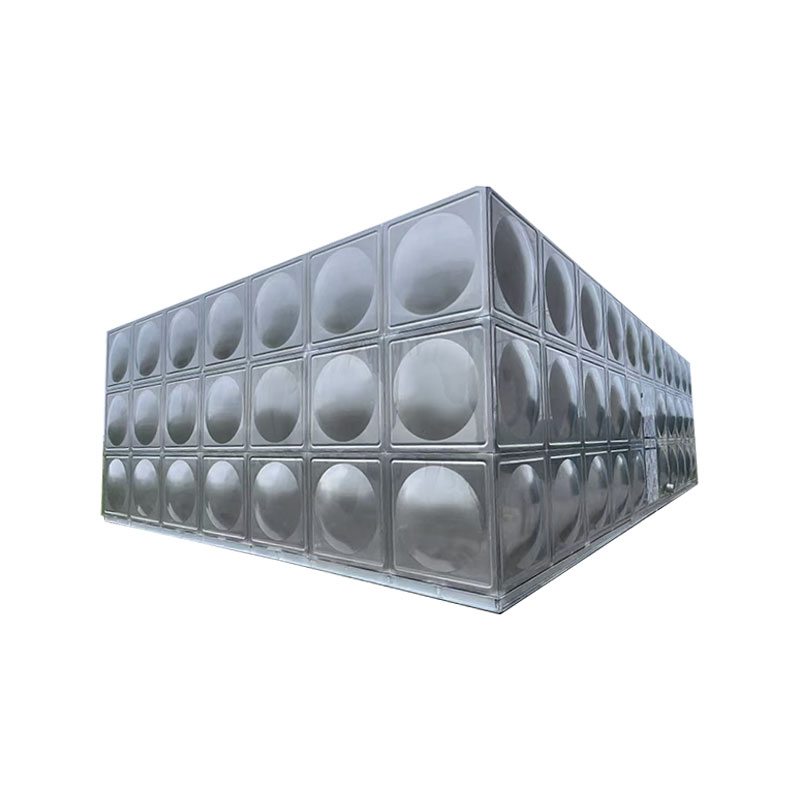
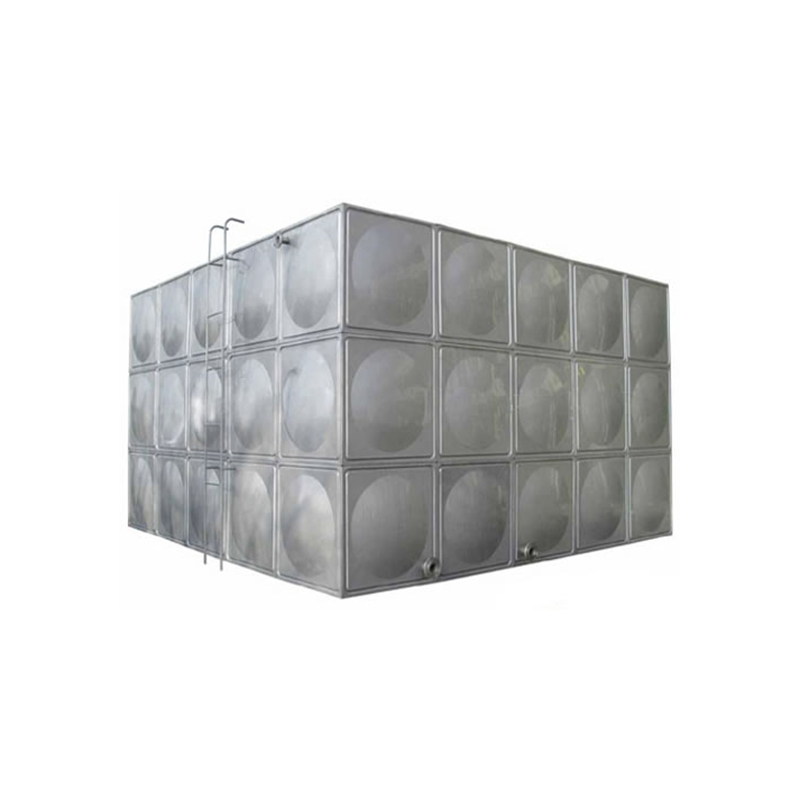
A stainless steel sectional tank is built from factory-pressed flat or corrugated panels — typically 1m × 1m or 0.5m × 0.5m — that are transported flat-packed to site and bolted together using food-grade silicone gaskets and stainless steel fasteners. The finished tank can range from a few thousand litres to several million litres, assembled entirely by technicians on-site without welding equipment.
The panels are typically pressed from Grade 304 stainless steel (1.4301) for standard potable water applications, or Grade 316 (1.4401) where chloride exposure from saline groundwater or coastal environments is a concern. Panel thickness ranges from 1.5mm for smaller tanks to 4mm or more for large-capacity high-head installations.
How Stainless Steel Sectional Tanks Are Assembled
- A reinforced concrete or steel base is prepared to support the tank's filled weight.
- Base panels are laid and bolted together with stainless steel bolts and food-grade silicone gasket strips between flanges.
- Wall panels are erected row by row, with internal tie rods or angle stiffeners added at specified intervals to resist hydrostatic pressure.
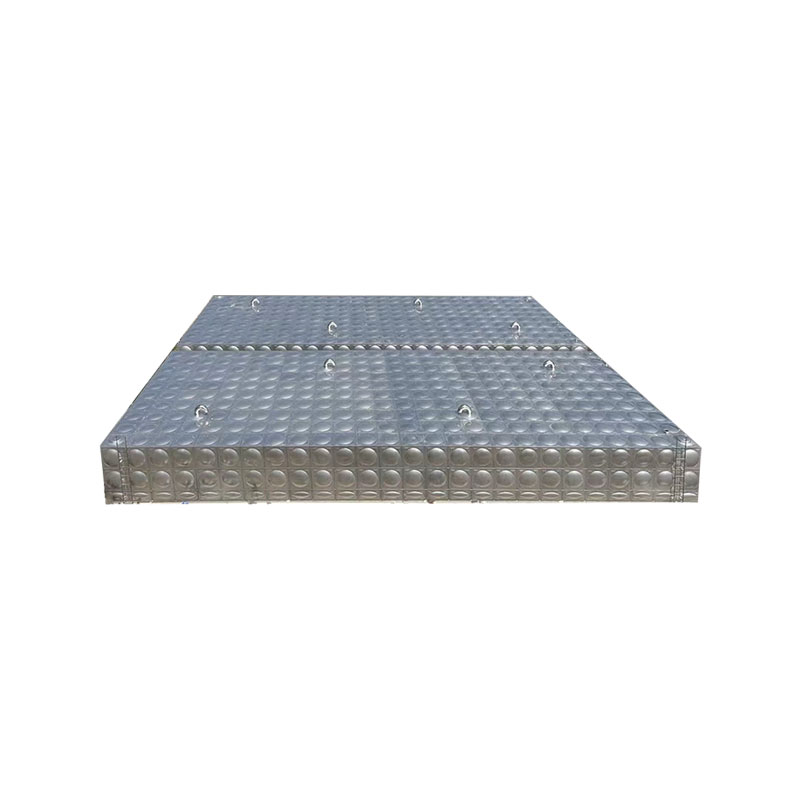
- Roof panels — flat, pitched, or domed — are fitted last, along with inspection hatches, vent pipes, overflow outlets, and inlet/outlet connections.
- A water-tightness test (fill test) is performed before commissioning.
Because all components arrive flat-packed, a 100,000-litre tank can be delivered in a standard shipping container and assembled in a location unreachable by a crane large enough to lift a comparable single-piece tank.
Key Advantages of Stainless Steel Sectional Tanks Over Other Types
1. Unlimited Scalability Through Panel Addition
Unlike polyethylene or single-piece GRP tanks, a stainless steel sectional tank can be expanded after initial installation simply by adding more panels. A 200,000-litre tank can be extended to 400,000 litres without demolishing and replacing the existing structure — a significant operational and cost advantage for growing facilities.
2. Superior Hygienic Properties for Potable Water
Stainless steel has a non-porous, electropolished surface that inhibits biofilm formation and bacterial adhesion far more effectively than plastic or coated steel. Grade 304 stainless steel is fully compliant with WHO guidelines for drinking water contact materials and meets standards including BS EN 1825, WRAS (UK), NSF/ANSI 61 (USA), and AS/NZS 4020 (Australia/New Zealand).
3. Structural Strength and Seismic Resistance
The bolted panel system with internal stiffeners allows stainless steel sectional tanks to be engineered to resist seismic loads, wind uplift, and high hydrostatic pressures. Tanks used in municipal water supply systems in earthquake-prone regions — including Japan and New Zealand — are almost exclusively stainless steel sectional designs for this reason.
4. Long Service Life with Minimal Maintenance
With no internal coatings to degrade, a stainless steel sectional tank properly installed can remain in service for 30 to 50 years. Maintenance is limited to periodic cleaning (typically annually), gasket inspection every 5–10 years, and tightening of fasteners after thermal cycling. There is no repainting, relining, or structural remediation comparable to what mild steel tanks require.
5. Installation Flexibility in Restricted Spaces
Panel dimensions of 1m × 1m mean that all components pass through standard doorways and stairwells. This makes stainless steel sectional tanks the only practical option for installing large-capacity storage tanks in basement plant rooms, rooftop enclosures with limited crane access, or existing buildings where structural renovation is not feasible.
Stainless Steel Sectional Tank Grades: 304 vs. 316
Choosing the correct stainless steel grade is one of the most consequential material decisions in tank specification.
Grade 304 vs. Grade 316 stainless steel for sectional water tank applications
| Property |
Grade 304 (1.4301) |
Grade 316 (1.4401) |
| Chromium content |
18% |
16–18% |
| Molybdenum content |
None |
2–3% (key differentiator) |
| Chloride resistance |
Moderate |
High |
| Best application |
Municipal potable water, inland sites |
Coastal, saline groundwater, food processing |
| Relative material cost |
Base cost |
Approximately 20–30% higher |
For the majority of municipal and commercial potable water storage applications, Grade 304 provides sufficient corrosion resistance at lower cost. Grade 316 should be specified wherever the water source has chloride levels above 200 mg/L or where the tank is installed within 500 metres of a coastline.
Typical Applications of Stainless Steel Sectional Tanks
The versatility of the sectional format means these tanks appear across a wide spectrum of industries and infrastructure types:
- Municipal water supply: Elevated or ground-level service reservoirs storing treated water for distribution networks — capacities typically ranging from 500,000L to 5,000,000L+.
- High-rise building cold water storage: Rooftop and basement break tanks supplying domestic cold water and fire suppression systems where access prevents single-piece tank delivery.
- Hospitals and healthcare facilities: Where water quality and compliance with HTM 04-01 (UK) or equivalent standards is mandatory and contamination risk from coating degradation is unacceptable.
- Food and beverage production: Process water and ingredient water storage requiring NSF/ANSI 61 compliance and CIP (clean-in-place) compatibility.
- Emergency water reserves: Disaster preparedness installations requiring rapid on-site assembly and long-term storage without water quality degradation.
- Fire suppression systems: Fire water storage tanks per NFPA 22 or BS EN 12845 specifications, where structural integrity and tank volume accuracy are regulatory requirements.
How to Choose the Right Water Tank Type for Your Project
Use the following decision criteria to narrow your selection:
- If capacity is below 10,000 litres and budget is the primary driver: Polyethylene tanks are the practical choice for non-critical, non-potable, or short-lifecycle applications.
- If chemical storage or moderate-capacity potable water storage is needed: GRP sectional tanks offer a cost-effective balance between corrosion resistance and capacity.
- If capacity exceeds 50,000 litres, potable water quality is required, or service life must exceed 30 years: Stainless steel sectional tanks are the correct and industry-standard specification.
- If the installation site is access-restricted: Only stainless steel sectional tanks can be practically assembled inside existing structures without demolition or crane access.
- If future capacity expansion is anticipated: Only stainless steel sectional tanks allow cost-effective expansion by adding panels to an existing installation.
For large infrastructure projects, the higher initial cost of stainless steel sectional tanks is consistently justified by lower whole-life cost — when maintenance savings, avoided relining cycles, and extended service life are factored over a 30-year project horizon, stainless steel sectional tanks typically deliver a lower total cost of ownership than either GRP or coated mild steel alternatives.



 Tiếng Việt
 عربى
عربى Get a quote

 Tel: +86 0515-86302568
  E-mail:
  Add: No. 11, Xingwang Road, Jianyang Town, Jianhu County, Jiangsu Province, China