What Is an Assembly Bolted Sectional Water Tank?
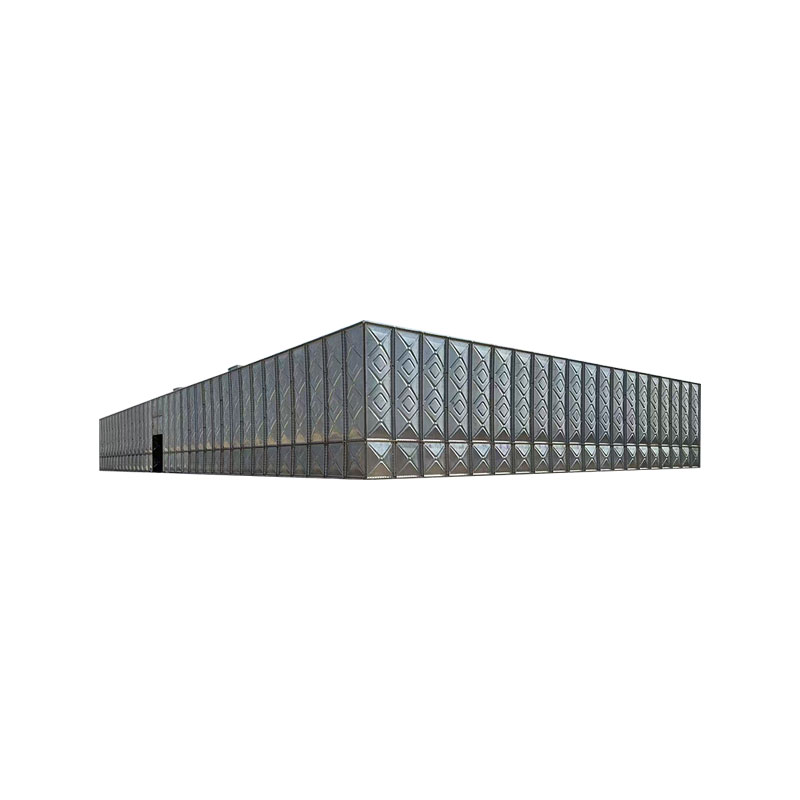
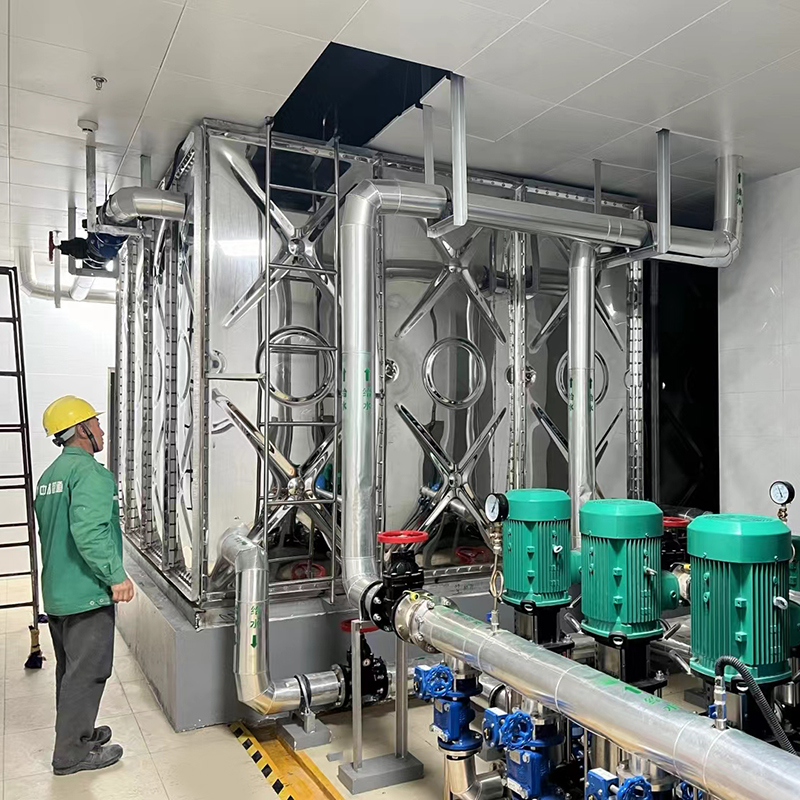
An assembly bolted sectional water tank is a modular storage tank built from individual panels bolted together on site, rather than shipped as one welded or molded unit. Each panel — typically glass-fused-to-steel, hot-dip galvanized steel, or stainless steel — is manufactured to precise dimensions in a factory, then transported flat-packed and assembled at the installation location using bolts, sealant, and internal/external liner sheets.
This construction method makes bolted sectional tanks the preferred choice whenever a large water storage capacity is needed but transporting a single pre-built tank is impractical. Capacities commonly range from 5 cubic meters to over 10,000 cubic meters, and because the tank is modular, it can be expanded later by adding sections — something a one-piece tank simply cannot do.
How Bolted Sectional Tanks Are Assembled
Installation follows a defined sequence that differs significantly from pouring a concrete tank or welding a steel one. Understanding this process helps buyers estimate realistic project timelines and labor requirements.
- Foundation preparation: a level concrete ring beam or slab foundation is poured and cured, typically requiring 7 to 14 days before load-bearing assembly can begin
- Panel delivery and staging: flat-packed steel or GRP (glass-reinforced plastic) panels arrive on standard flatbed trucks, since panels rarely exceed 1.2m x 1.2m for easy handling
- Bottom panel assembly: floor panels are bolted together first, forming the base of the tank
- Wall panel erection: side panels are bolted row by row, often using internal scaffolding or a center mast and winch system to lift upper courses
- Sealing and liner installation: butyl rubber sealant is applied between panel joints, and an internal liner is fitted if required for potable water compliance
- Roof installation and testing: roof panels, vents, and access hatches are fitted, followed by a hydrostatic leak test before commissioning
For a mid-sized tank in the range of 200 to 500 cubic meters, a trained installation crew of 4 to 6 workers can typically complete full assembly in 5 to 10 working days, excluding foundation curing time.
Key Advantages Over Other Tank Construction Methods
Bolted sectional tanks compete against welded steel tanks, concrete tanks, and single-piece plastic tanks. Each method has trade-offs, and the table below summarizes how sectional tanks compare on the factors that matter most to project planners.
Comparison of bolted sectional tanks against common alternative water storage construction methods
| Construction Type |
Site Access Needed |
Typical Install Time |
Expandable |
| Bolted Sectional Tank |
Standard truck access |
1-3 weeks |
Yes |
| Welded Steel Tank |
Crane and welding rig access |
4-8 weeks |
No |
| Cast-in-Place Concrete |
Concrete mixer and formwork access |
6-12 weeks |
No |
| Single-Piece Plastic Tank |
Crane for large units |
1-2 days |
No |
The single biggest advantage of bolted construction is site accessibility. Because panels are small and flat, sectional tanks can be built in confined spaces, on rooftops, or in remote locations where crane access or wet concrete delivery is impossible.
Material Options and Their Best Use Cases
The panel material determines a tank's suitability for potable water, wastewater, fire protection, or industrial fluid storage. Choosing the wrong material for the application is one of the most common and costly specification errors.
Glass-Fused-to-Steel (GFS)
GFS panels are fired at temperatures exceeding 820°C to fuse a glass coating onto the steel substrate, creating a surface highly resistant to corrosion and bacterial growth. This makes GFS the dominant choice for potable water storage and wastewater treatment applications, with a typical service life of 30 to 40 years.
Hot-Dip Galvanized Steel
Galvanized panels are more economical than GFS and suitable for fire protection reservoirs, agricultural water storage, and industrial process water where extreme longevity is less critical. Zinc coating thickness typically ranges from 350 to 600 g/m² depending on the manufacturer's specification.
Stainless Steel
Stainless steel panels, usually Grade 304 or 316, are specified for food and beverage processing, pharmaceutical water, and other applications where the highest hygiene standards and chemical resistance are required, though at a significantly higher material cost than GFS or galvanized options.
Common Applications for Bolted Sectional Water Tanks
Because of their scalability and site flexibility, bolted sectional tanks appear across a wide range of industries. The following list covers the most frequent use cases specifiers should be aware of.
- Municipal drinking water storage: district reservoirs and water treatment plant clear wells
- Fire protection reserves: dedicated water supply for sprinkler systems in factories, warehouses, and commercial buildings
- Agricultural irrigation: on-farm water storage for drip and sprinkler irrigation systems
- Industrial process water: cooling water reserves and manufacturing process supply
- Wastewater and effluent treatment: holding tanks in treatment plant workflows
- Mining and remote site operations: water supply where road access limits deliverable tank sizes
In fire protection applications specifically, NFPA 22 and local fire codes often dictate minimum required storage volumes, and bolted sectional tanks are frequently specified because they can be sized precisely to meet code requirements without over-ordering capacity.
Key Specifications to Confirm Before Ordering
Before finalizing a purchase order or wholesale supply agreement, buyers should verify the following specifications to avoid mismatches between design intent and delivered product.
- Design standard compliance: confirm the tank is manufactured to AWWA D103 (steel panel design) or an equivalent recognized standard
- Panel thickness and coating grade: verify steel gauge and, for GFS panels, confirm glass coating thickness meets project specification
- Seismic and wind loading design: ensure structural calculations account for local seismic zone and wind speed requirements
- Liner material for potable use: check that internal liners meet NSF/ANSI 61 or equivalent drinking water safety certification
- Warranty terms: most reputable manufacturers offer 10 to 25 year structural warranties depending on material grade
Buyers sourcing tanks for bulk or wholesale supply should also request third-party mill test certificates for steel composition, since these documents confirm that delivered material matches the specification quoted, protecting against substandard substitutions.
Maintenance Requirements to Maximize Tank Lifespan
A properly installed bolted sectional tank requires relatively low maintenance, but periodic inspection is essential to reach its full rated service life. Recommended maintenance activities include:
- Annual visual inspection of external panel joints and bolt torque to check for sealant degradation
- Internal inspection every 3 to 5 years for potable water tanks, checking liner integrity and sediment buildup
- Re-torquing of bolted connections after the first 6 to 12 months, since minor settling can loosen initial installation tension
- Cleaning and disinfection of potable water tanks according to local health authority scheduling requirements
- Corrosion spot-checks on galvanized panels, particularly near the waterline where coating wear is most common
Tanks that follow this maintenance schedule commonly reach or exceed their manufacturer-rated service life, while neglected sealant and bolt maintenance is the leading cause of premature leaks in bolted tank systems.
Summary: Is a Bolted Sectional Tank Right for Your Project?
An assembly bolted sectional water tank is the right choice when a project needs large-capacity water storage delivered to a site with limited access, tight timelines, or future expansion requirements. Compared to welded steel or cast-in-place concrete, bolted construction offers faster installation, easier transport, and the flexibility to add sections later. When specifying or purchasing one, confirm the panel material matches your water quality needs, verify compliance with recognized design standards like AWWA D103, and request material certification when sourcing at scale. For most municipal, industrial, agricultural, and fire protection storage needs, a well-specified bolted sectional tank delivers the best combination of cost, speed, and long-term reliability.



 Tiếng Việt
 عربى
عربى Get a quote

 Tel: +86 0515-86302568
  E-mail:
  Add: No. 11, Xingwang Road, Jianyang Town, Jianhu County, Jiangsu Province, China