FRP (Fiberglass Reinforced Plastic) tanks and PP (Polypropylene) tanks are both non-metallic chemical storage solutions, but they differ fundamentally in construction, chemical resistance, structural strength, size capability, and cost. FRP tanks use a composite structure of glass fibers embedded in a thermoset resin (polyester, vinyl ester, or epoxy), producing a rigid, high-strength vessel that can be built to virtually any size. PP tanks are made from thermoplastic polypropylene — either rotationally molded or welded from sheet — producing a chemically inert, lightweight vessel that excels with acids and organic solvents but is limited in size and structural performance. Choosing between them requires matching the tank's structural, chemical, and operational requirements to each material's specific strengths. Using FRP where PP suffices wastes money; using PP where FRP is needed risks structural failure.
Material Composition and Manufacturing
How FRP Tanks Are Made
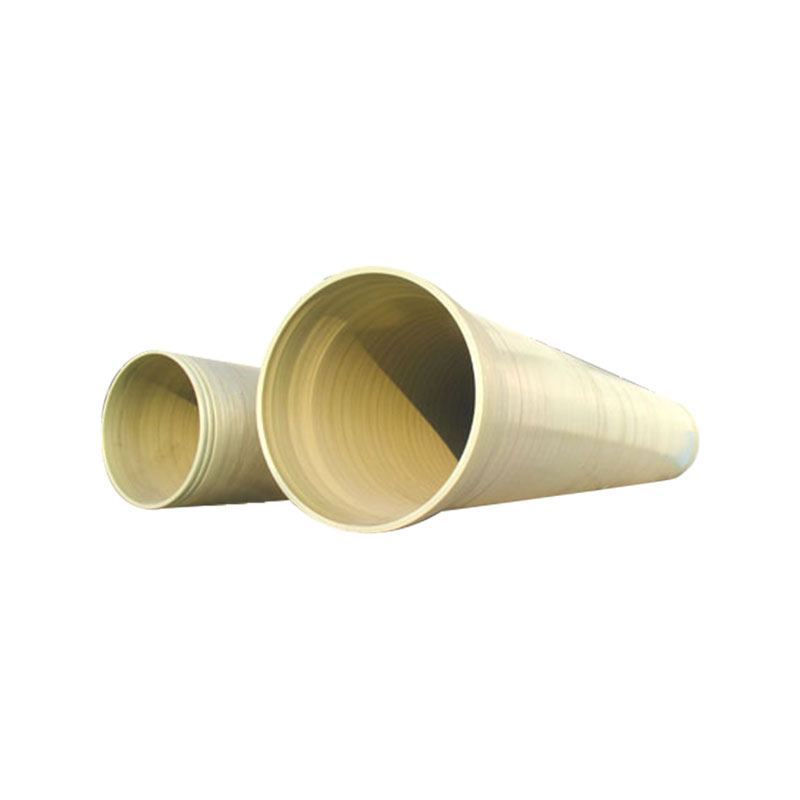
FRP tanks are composite structures manufactured by layering glass fiber reinforcement — chopped strand mat, woven roving, or filament-wound continuous fiber — into a thermoset resin matrix. The resin system is selected based on chemical service: standard polyester resin for general water and mild chemical service, isophthalic polyester for improved chemical and water resistance, vinyl ester resin for aggressive acids and oxidizing chemicals, and epoxy resin for the most demanding industrial service. The structure cures irreversibly — once formed, it cannot be remelted or reshaped.
The most common FRP tank manufacturing method is filament winding, where continuous glass fiber is wound onto a rotating mandrel under tension at controlled angles (typically 54.7° for pressure applications). This produces a high-fiber-volume composite with tensile strengths reaching 150–300 MPa depending on fiber orientation and resin system. Contact molding (hand layup) and spray-up methods are used for smaller or custom tanks where automated winding is impractical.
How PP Tanks Are Made
PP tanks are manufactured primarily by two methods. Rotational molding (rotomolding) heats PP powder inside a rotating mold, producing seamless one-piece tanks with wall thicknesses of 6–12mm — the dominant method for storage tanks up to approximately 50,000 liters. Sheet welding (thermoplastic fabrication) cuts and welds PP sheet stock using hot gas or extrusion welding, used for tanks requiring custom shapes, large flat bottoms, or integrated baffles. Both methods produce a fully thermoplastic vessel that can theoretically be reformed or welded for repair, though practical repair quality is limited.
Two grades of PP are commonly used in tanks: standard homopolymer PP and the superior PP-H (homopolymer) and PP-R (random copolymer), which offer improved low-temperature impact resistance. For chemical service where higher purity is required, natural (unfilled, uncolored) PP is specified to avoid extractable additives from pigments or stabilizers.
Structural Strength and Size Capability
This is where FRP and PP tanks diverge most dramatically in capability and application suitability.
FRP Structural Advantages
FRP's composite structure gives it a tensile strength-to-weight ratio superior to many metals. A filament-wound FRP tank wall achieves tensile strengths of 150–300 MPa with a density of approximately 1.7–2.0 g/cm³, compared to steel at 400–600 MPa tensile strength but 7.8 g/cm³. This makes FRP tanks approximately 4× lighter than equivalent steel tanks while maintaining structural integrity at large sizes.
FRP tanks can be engineered to any structural requirement by adjusting wall thickness, fiber orientation, and resin system. They are routinely manufactured in capacities from 500 liters to over 1,000,000 liters for industrial and municipal applications. Above-ground vertical FRP tanks up to 10 meters in diameter are standard products from major manufacturers. This is well beyond what PP construction can achieve without internal structural support.
PP Structural Limitations
PP is a thermoplastic with a tensile strength of only 25–40 MPa and a flexural modulus of approximately 1.1–1.6 GPa. While adequate for smaller tanks, this relatively low stiffness means that large PP tanks deflect and creep under sustained hydrostatic pressure, particularly at elevated temperatures. Above approximately 20,000–30,000 liters, free-standing PP tanks become impractical without external structural support (concrete containment, steel jacketing, or FRP overwrap). Most PP tanks are limited to 20,000 liters or less in standard commercial offerings, with the sweet spot for rotationally molded PP tanks in the 500–10,000 liter range.
PP also suffers significant strength reduction at elevated temperatures. At 60°C, PP retains only about 50–60% of its room-temperature tensile strength. At 80°C, strength drops further, and the tank wall may creep and deform under sustained load — a condition called stress relaxation that is not reversed when temperature returns to ambient.
Chemical Resistance: The Critical Differentiator
Chemical resistance is often the deciding factor between FRP and PP, and the answer is not simply "one is better" — each excels with specific chemical families and fails with others.
PP Chemical Resistance Strengths
PP is a non-polar polymer with excellent resistance to a broad range of inorganic acids (hydrochloric acid, sulfuric acid up to moderate concentrations, phosphoric acid, hydrofluoric acid), organic acids, aqueous alkalis, alcohols, and many organic solvents. Critically, PP has excellent resistance to hydrofluoric acid (HF) — one of the most chemically aggressive industrial acids — whereas most resins used in FRP are attacked by HF, making PP the standard material for HF storage and handling systems. PP also has essentially zero water absorption, preventing osmotic degradation over time.
PP Chemical Resistance Weaknesses
PP is attacked by strong oxidizing acids (concentrated nitric acid, concentrated sulfuric acid above approximately 70%, fuming sulfuric acid, chlorosulfonic acid) and is susceptible to swelling and permeation by chlorinated solvents, aromatic hydrocarbons (toluene, xylene), and aliphatic hydrocarbons (hexane, heptane). UV radiation degrades unstabilized PP significantly — outdoor PP tanks without UV stabilizer additives or UV-protective coatings can become brittle within 2–4 years.
FRP Chemical Resistance by Resin Type
FRP's chemical resistance is primarily determined by the inner liner resin, which provides the primary barrier between the stored chemical and the structural laminate. The correct resin selection is critical:
- Orthophthalic polyester — suitable for water, dilute acids, and weak alkalis; lowest cost; poor resistance to strong acids or solvents
- Isophthalic polyester — improved chemical and water resistance over ortho; suitable for most dilute acid and alkali service; not suitable for strong oxidizers or chlorinated solvents
- Vinyl ester resin — superior resistance to strong acids (HCl up to 37%, H₂SO₄ up to 70%), oxidizing environments, and many solvents; the standard for aggressive chemical service in FRP; significantly more expensive than polyester
- Epoxy resin — excellent resistance to alkalis and many organic chemicals; best choice for caustic soda (NaOH), potassium hydroxide, and amine service where vinyl ester may degrade
- FRP + PP liner — for extreme chemical service (HF, mixed oxidizing acids), an FRP structural shell with a thermally bonded PP inner liner combines FRP's structural strength with PP's superior chemical resistance; this hybrid is used in the most demanding industrial applications
Temperature Range and Thermal Performance
Temperature performance limits for FRP and PP tanks across key service conditions
| Parameter |
PP Tank |
FRP Tank (Vinyl Ester) |
FRP Tank (Epoxy) |
| Maximum continuous service temp. |
60°C (design dependent) |
80–100°C |
100–120°C |
| Maximum intermittent peak temp. |
~80°C (short duration) |
110–130°C |
130–150°C |
| Strength retention at 60°C |
50–60% of ambient |
85–90% of ambient |
90–95% of ambient |
| Minimum service temperature |
0°C (becomes brittle below) |
-40°C (with proper laminate) |
-50°C |
| Creep under sustained load |
Significant above 40°C |
Minimal below Tg |
Very low |
The thermal performance difference is one of the strongest arguments for FRP over PP in chemical processing environments. Many industrial processes involve heat-generating chemical reactions, steam tracing for viscous fluids, or hot process streams — conditions where PP's strength quickly becomes inadequate and FRP's thermoset structure maintains performance.
Side-by-Side Property Comparison
Comprehensive property comparison of FRP and PP tanks across structural, chemical, and operational parameters
| Property |
FRP Tank |
PP Tank |
| Tensile strength |
150–300 MPa |
25–40 MPa |
| Density |
1.7–2.0 g/cm³ |
0.90–0.91 g/cm³ |
| Max tank capacity (standard) |
1,000,000+ liters |
20,000–30,000 liters |
| Max continuous temp. |
80–120°C (resin dependent) |
60°C |
| HF acid resistance |
Poor (most resins) |
Excellent |
| Oxidizing acid resistance |
Good (vinyl ester) |
Poor (conc. HNO₃, conc. H₂SO₄) |
| UV resistance |
Good (gel coat protected) |
Poor without UV stabilizers |
| Water absorption |
0.1–0.3% (resin dependent) |
<0.01% |
| Repairability |
Good (laminate patching) |
Limited (weld repair) |
| Relative cost (same capacity) |
Higher |
Lower |
| Design service life |
20–30+ years |
10–20 years |
Cost Comparison: Purchase, Installation, and Lifetime
PP tanks have a lower purchase price per liter of capacity at smaller sizes, primarily because PP resin is less expensive than vinyl ester or epoxy resin, and rotational molding is a highly automated, low-labor process. For a 5,000-liter above-ground storage tank, a standard rotationally molded PP tank typically costs 30–50% less than an equivalent FRP tank in the same capacity for general chemical service.
However, the cost relationship reverses at large capacities. PP tanks above 20,000 liters require expensive internal or external reinforcement to prevent structural creep, erasing their cost advantage. FRP tanks scale efficiently because wall thickness increases predictably with diameter — manufacturing cost per liter of capacity actually decreases at larger sizes for FRP. For capacities above 50,000 liters, FRP is almost always the more cost-effective solution on a per-liter basis.
Lifetime cost must also account for service life: FRP tanks designed to ASTM D3299 or BS4994 standards are warranted for 20–25 years with normal maintenance. PP tanks in aggressive chemical or UV-exposed service may require replacement in 10–15 years. The longer replacement cycle of FRP frequently justifies higher initial cost in industrial applications where downtime for tank replacement is operationally disruptive and expensive.
Installation, Handling, and Maintenance
FRP Installation Considerations
Large FRP tanks are typically transported in finished form and require crane lifting for installation. They must be set on continuously supported, level foundations — FRP tanks cannot be supported on ring foundations at their bottom edges without risk of stress concentration and cracking. Underground FRP tanks require careful bedding in compacted sand or pea gravel per manufacturer specifications; improper bedding leads to localized buckling. FRP is susceptible to impact damage from dropped tools or equipment — impact creates internal laminate cracking (delamination) that may not be visible externally but compromises structural integrity.
PP Installation Considerations
PP tanks' very low density (0.90–0.91 g/cm³) — lighter than water — means empty tanks have significant buoyancy risk in flood-prone areas or high groundwater locations when underground. Above-ground PP tanks are lightweight and easily positioned without heavy lifting equipment for sizes under 5,000 liters, reducing installation cost. PP tanks must not be installed in direct UV sunlight without UV-stabilized material or protective coating; unstabilized PP becomes brittle and chalky within 2–4 years of direct outdoor exposure.
Maintenance and Inspection
FRP tanks should be inspected internally every 3–5 years for liner blistering, cracking, or delamination using visual inspection and acoustic sounding. Damaged areas can be repaired by grinding back to sound laminate and applying fresh resin and glass — a repair that restores full structural integrity when done correctly. PP tanks are inspected for stress cracking, surface chalking (UV degradation indicator), weld seam integrity, and wall thinning from chemical attack. Weld repair of cracked PP seams is possible but produces lower-strength joints than the parent material; a heavily cracked PP tank typically requires replacement rather than repair.
Industry Applications: Where Each Tank Type Is Standard
Where FRP Tanks Dominate
- Municipal water treatment — large-diameter FRP tanks for chemical dosing (sodium hypochlorite, ferric sulfate, polymer) and process water storage; sizes from 10,000 to 500,000+ liters
- Industrial chemical storage — sulfuric acid, hydrochloric acid, sodium hydroxide, sodium hypochlorite at large volumes and elevated temperatures in petrochemical, mining, and manufacturing facilities
- Oil and gas — produced water tanks, chemical injection vessels, brine storage; FRP's resistance to H₂S-containing fluids and its non-conductive properties are valued
- Wastewater treatment — equalization tanks, aeration tanks, chemical feed tanks for biological and chemical treatment processes
- Underground fuel storage — FRP double-wall underground storage tanks (USTs) for petroleum products, meeting EPA secondary containment requirements
Where PP Tanks Dominate
- Semiconductor and electronics manufacturing — ultra-pure chemical storage (HF, HCl, H₂SO₄, H₃PO₄) where PP's purity and inertness prevent trace metal contamination that FRP resins can leach
- Hydrofluoric acid handling — PP is the material of choice for HF storage and process vessels across the chemical industry and semiconductor sector
- Agricultural chemical storage — fertilizer solutions, pesticide concentrates, and nutrient solutions in smaller farm tanks (500–10,000 liters)
- Electroplating and surface finishing — acid baths, rinse tanks, and process solution storage at modest sizes and temperatures
- Food and beverage processing — food-grade PP is FDA-compliant for food contact; used for ingredient storage, CIP chemical tanks, and process fluid holding
Decision Framework: Choosing Between FRP and PP
Apply the following criteria in sequence to determine the appropriate tank material:
- Is hydrofluoric acid involved? If yes, select PP (or HDPE/PVDF). FRP resins are not compatible with HF and will degrade rapidly. This is a non-negotiable material selection criterion.
- Does the capacity exceed 20,000–30,000 liters? If yes, FRP is the practical structural choice. PP cannot provide adequate self-supporting strength at large capacities without costly reinforcement that negates its cost advantage.
- Does the service temperature exceed 60°C continuously? If yes, select FRP with appropriate resin. PP's strength drops to 50–60% at 60°C, making it unsuitable for sustained elevated-temperature service.
- Is the chemical an oxidizing acid (concentrated HNO₃, concentrated H₂SO₄ above 70%)? If yes, neither standard PP nor standard FRP polyester resin is suitable. Vinyl ester FRP or specialty materials (PVDF, Hastelloy-lined tanks) should be evaluated.
- Is ultra-purity or low extractables required? For semiconductor, pharmaceutical, or food applications where trace contamination from resin components is unacceptable, PP (particularly natural/unfilled grades) is preferred over FRP where the resin matrix can release trace organics.
- Is long outdoor UV exposure a primary concern without protective measures? FRP with gel coat exterior performs better in long-term outdoor UV exposure than unstabilized PP. If PP must be used outdoors, specify UV-stabilized grade and inspect annually for surface chalking.
- If none of the above apply and capacity is under 10,000 liters at ambient temperature, PP is generally the more cost-effective choice for most common acid and alkali storage applications.



 Tiếng Việt
 عربى
عربى Get a quote

 Tel: +86 0515-86302568
  E-mail:
  Add: No. 11, Xingwang Road, Jianyang Town, Jianhu County, Jiangsu Province, China