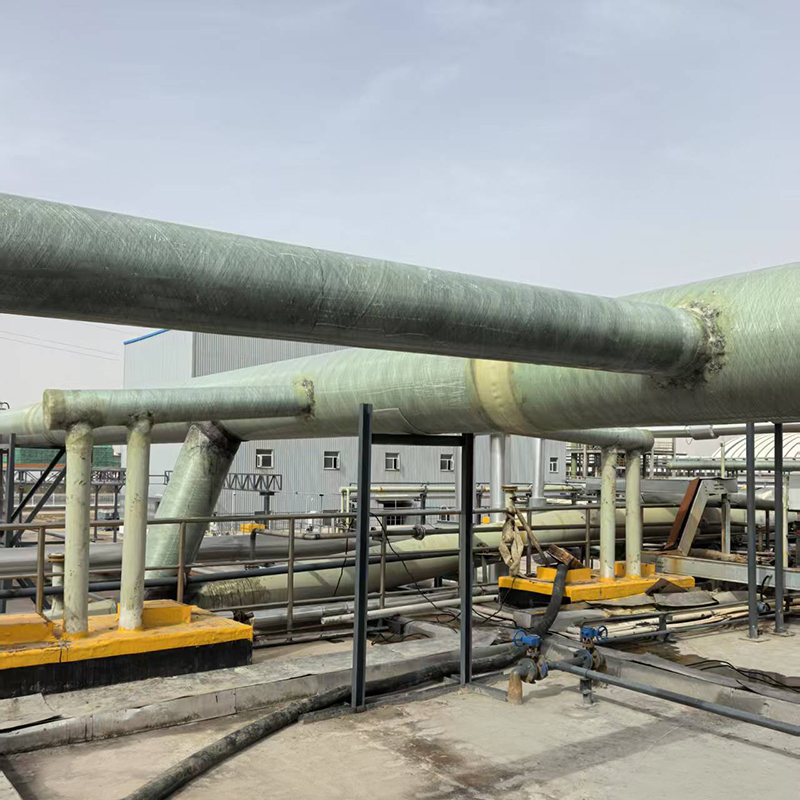
With global water resources becoming increasingly scarce, the modernization of water conservancy infrastructure has become a key priority for governments and businesses worldwide. Against this backdrop, FRP pipes, due to their superior performance, have become an indispensable material for water conservancy infrastructure construction. With their lightweight, high strength, corrosion resistance, and wear resistance, FRP pipes are increasingly becoming the preferred pipe material for various water conservancy projects.
Characteristics and Advantages of FRP Pipes
FRP pipes, as the name suggests, are made of a composite of fiber-reinforced plastic and a resin matrix. They combine the advantages of metal and plastic, offering the high strength and pressure resistance of metal pipes with the corrosion resistance, lightness, and ease of processing of plastic pipes.
Strong Corrosion Resistance
One of the greatest advantages of FRP pipes is their excellent corrosion resistance. Water conservancy projects often involve prolonged contact with water, soil, and chemicals. Traditional metal pipes are particularly susceptible to corrosion and damage in environments with high pH or poor water quality, leading to leaks and degradation. FRP pipes, however, utilize high-strength fiber reinforcement and a specialized resin matrix, making them exceptionally corrosion-resistant. They can withstand the erosion of various chemicals, sewage, and seawater, significantly extending their service life.
Lightness and High Strength
FRP pipes have a lower density, making them lighter than traditional metal pipes, making them easier to transport and install. Thanks to their fiber reinforcement, FRP pipes maintain a low weight while maintaining exceptional strength, capable of withstanding high operating pressures. This makes FRP pipes ideal for long-distance, complex terrain, or high-load water conservancy projects, preventing secondary damage caused by pipe rupture or deformation.
Abrasion and Aging Resistance
In water conservancy infrastructure, pipes must withstand the long-term erosion and wear of water flow, especially in rivers with high sediment content, where pipes are susceptible to physical damage. FRP pipes have a smooth inner wall and a low friction coefficient, effectively reducing water flow resistance while also offering strong wear resistance. FRP pipes also exhibit excellent aging resistance, resisting environmental influences such as UV rays and temperature fluctuations, ensuring long-term stable operation.
Energy Saving and Environmental Protection
The production and use of FRP pipes are environmentally friendly, using recyclable raw materials and embracing green environmental protection. FRP pipes' corrosion and wear resistance reduce the frequency of pipe maintenance and replacement, further reducing resource consumption and waste generation, making them an ideal sustainable material.
Flexibility and Customizability
FRP pipes can be customized to meet the needs of different water conservancy projects. Whether in diameter, length, wall thickness, or strength grade, they can be designed to meet project requirements, providing a wide range of flexible application solutions. This high degree of customizability enables FRP pipes to be widely used in water conservancy projects of varying sizes and types.
Application of FRP Pipes in Water Conservancy Infrastructure
With increasing requirements for water resource management, the application of FRP pipes in water conservancy infrastructure has become increasingly widespread. FRP pipes are particularly important in the following areas:
Urban Water Supply and Drainage Systems
In urban water supply and drainage systems, pipe corrosion is a particularly prominent issue. Traditional steel pipes are susceptible to corrosion and oxidation over long-term use, leading to pipe aging, leakage, and bursting, increasing maintenance costs and wasting water resources. FRP pipes, with their superior corrosion resistance, can effectively prevent corrosion problems and ensure the stable operation of water supply and drainage systems. FRP pipes offer significant advantages, particularly in underground pipelines and sewage treatment pipelines.
Reservoir and Dam Construction
Reservoir and dam construction places stringent demands on pipes, particularly those that must withstand high water pressure and intense erosion. FRP pipes, with their high strength, pressure resistance, and wear resistance, effectively handle these extreme conditions. Their use in dam diversion systems, spillways, and reservoir discharge systems can improve overall system reliability and safety.
Irrigation Systems
FRP pipes are an ideal choice for agricultural irrigation systems due to their corrosion resistance, aging resistance, and pressure resistance. Whether used in freshwater irrigation or in saline-alkali soils, FRP pipes operate reliably, ensuring efficient use of water resources. Furthermore, their lightweight design and ease of installation significantly reduce the construction and maintenance costs of irrigation systems.
Marine Engineering and Aquaculture
In the marine engineering and aquaculture sectors, the corrosion resistance of FRP pipes is particularly important. Because salt and other chemicals in seawater quickly corrode traditional metal pipes, FRP pipes have become a key choice for desalination plants, offshore platforms, and marine water distribution systems. FRP pipes not only withstand corrosion from long-term immersion in seawater but also maintain efficient and stable operation in extreme weather conditions.
Wastewater Treatment and Chemical Transportation
Wastewater treatment plants and chemical transportation systems often face problems such as pipe corrosion, wear, and leakage. The limitations of traditional pipe materials are particularly evident when handling highly corrosive wastewater and chemical liquids. FRP pipes, with their superior corrosion and chemical resistance, excel in wastewater treatment and chemical transportation, effectively improving the safety and reliability of these systems.
The Significance of FRP Pipes in Promoting the Modernization of Water Infrastructure
With the acceleration of urbanization, traditional water infrastructure is increasingly unable to meet the demands of modern society for water resource management, water supply and drainage, and water safety. As a new, high-performance material, FRP pipes offer unique advantages, making them an indispensable component of modern water infrastructure.
Improving System Stability and Safety
FRP pipes, with their corrosion resistance, pressure resistance, and wear resistance, ensure the stability of water infrastructure, reduce water outages and pollution caused by pipe damage, and guarantee a secure water supply.
Reducing Maintenance and Replacement Costs
Corrosion and aging issues with traditional pipes often lead to frequent repairs and replacements, resulting in significant maintenance costs. FRP pipes, with their long service life and strong resistance to aging and corrosion, significantly reduce maintenance and replacement frequency, thereby lowering long-term operating costs.
Promoting Environmental Protection and Sustainable Development
FRP pipes not only have a low environmental impact but also effectively reduce resource waste. The materials used in their production process are recyclable, and the pipes' durability and efficiency reduce waste generation. Using FRP pipes helps promote green environmental protection and sustainable development.
Improving Construction Efficiency
The lightweight and customizable nature of FRP pipes makes the construction of water infrastructure more efficient. The transportation and installation of pipelines are more convenient, which shortens the construction period and improves the overall construction efficiency of the project.



 Tiếng Việt
 عربى
عربى Get a quote

 Tel: +86 0515-86302568
  E-mail:
  Add: No. 11, Xingwang Road, Jianyang Town, Jianhu County, Jiangsu Province, China