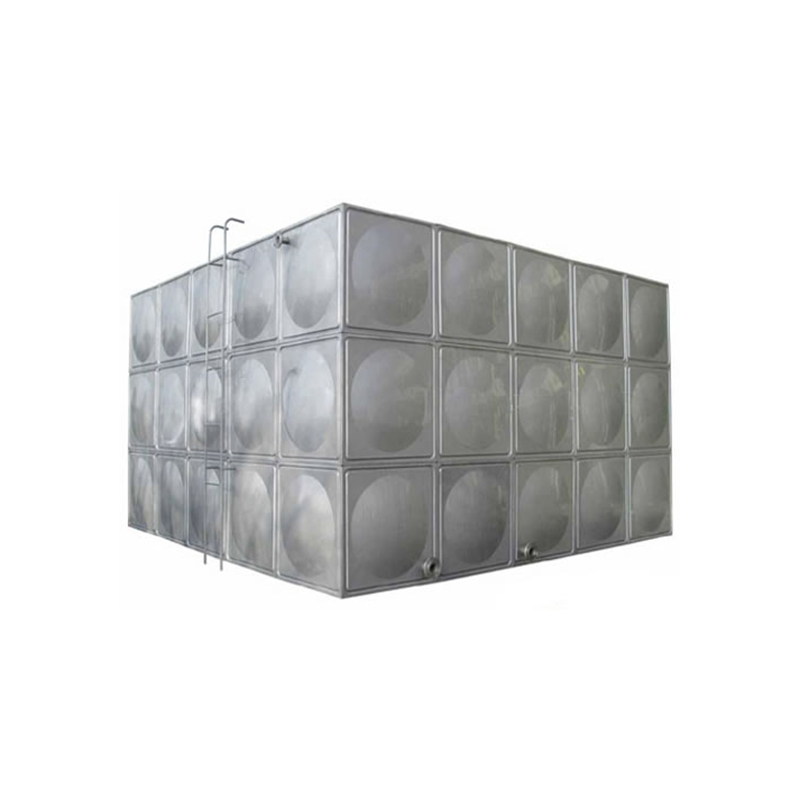
A sectional water tank is a modular storage system assembled on-site from pre-fabricated panels, rather than delivered as a single unit. This design allows large-capacity tanks — ranging from a few cubic meters to over 3,000 m³ — to be installed in locations where a monolithic tank could never fit, such as rooftops, basements, plant rooms, and confined mechanical spaces. Sectional tanks are the dominant choice for commercial buildings, hospitals, hotels, and industrial facilities worldwide.
How a Sectional Water Tank Works
Individual flat or curved panels are manufactured to standard dimensions — typically 1 m × 1 m or 0.5 m × 0.5 m — and transported to the installation site. Trained technicians bolt or clamp the panels together using gaskets and connecting hardware to form a watertight enclosure. Internal support pillars or tie rods are added for structural rigidity in larger configurations. The completed tank functions identically to a one-piece vessel, but with the critical advantage of field-adjustable capacity and geometry.
Because panels are interchangeable, the tank's footprint can be rectangular, square, or L-shaped to match available space. Capacity is expanded simply by adding more panels — no excavation, crane lifting, or structural modification to the building is required.
Main Types of Sectional Water Tanks
Stainless Steel Sectional Water Tank
Stainless steel sectional water tanks are manufactured from Grade 304 or Grade 316 stainless steel, with panel thickness typically ranging from 1.5 mm to 3.0 mm depending on tank height and pressure requirements. Grade 304 is standard for potable water storage, while Grade 316 — which contains 2–3% molybdenum — is specified for coastal environments, desalination applications, or wherever chloride-induced corrosion is a concern.
Key benefits include a smooth interior surface that resists biofilm formation, full compliance with drinking water standards (including WRAS, NSF/ANSI 61, and EN 1085), and a service life commonly cited at 25–50 years with minimal maintenance. Stainless steel panels are also recyclable at end of life, making them a sustainable choice.
Assembly Bolted Sectional Water Tank
The assembly bolted sectional water tank is the most common configuration. Panels are joined using stainless steel or hot-dip galvanized bolts at regular intervals around each panel edge, with food-grade EPDM or NBR rubber gaskets compressed between flanges to achieve a watertight seal. Bolt torque is specified by the manufacturer — typically 30–50 Nm — to ensure consistent gasket compression without over-stressing the panel flange.
Bolted assembly requires no welding, no special tools, and no hot works permit, which significantly simplifies installation in occupied buildings or fire-sensitive environments. A team of two technicians can typically assemble a 50 m³ tank in one to two working days.
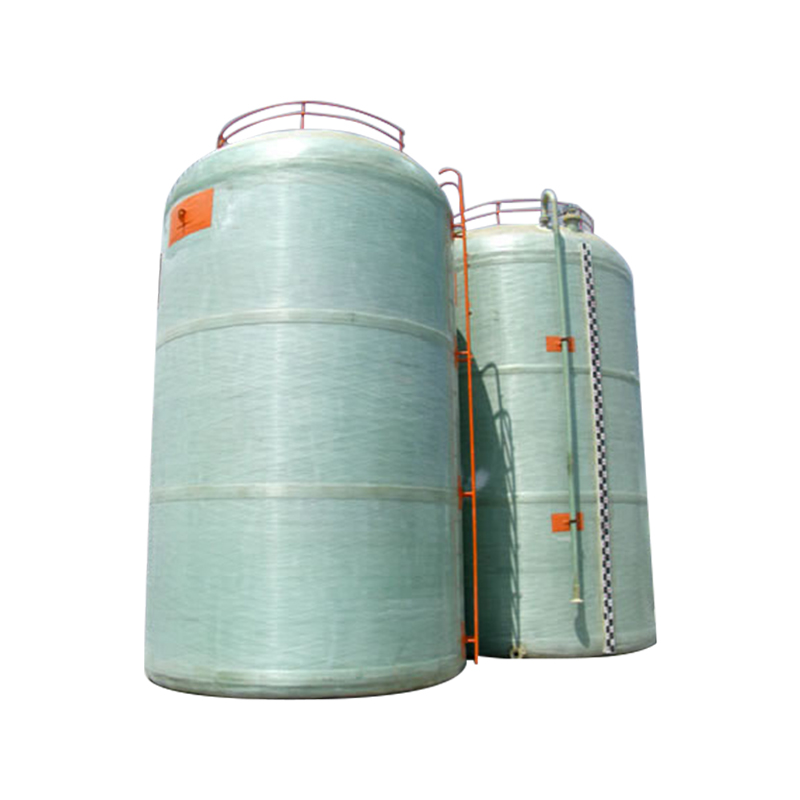
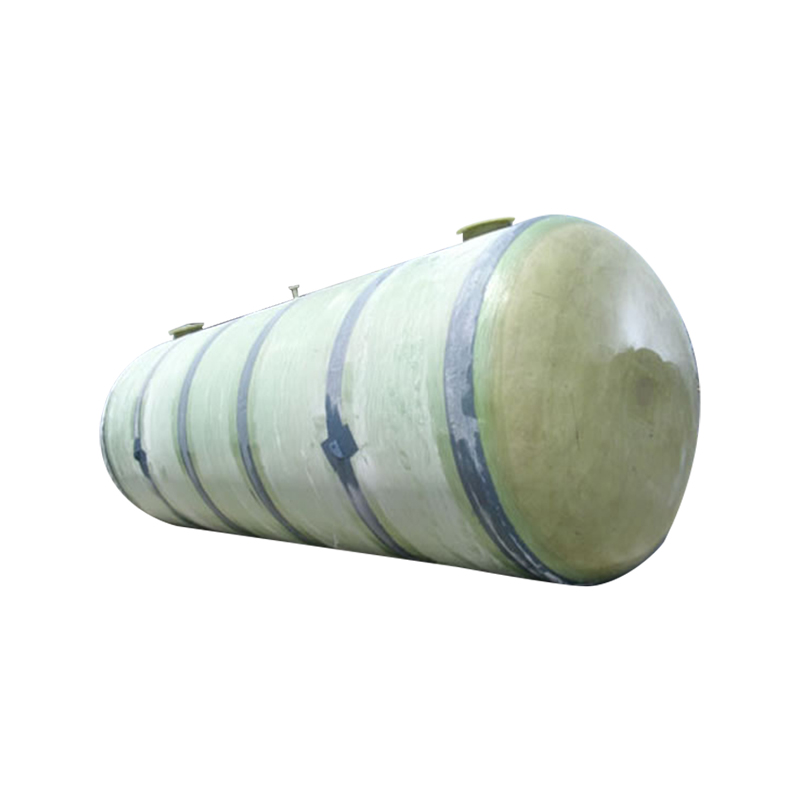
GRP (Fiberglass) Sectional Water Tank
Glass-reinforced plastic (GRP) sectional tanks are a lightweight alternative to stainless steel. Panel weights run 40–60% lower than equivalent steel panels, reducing lifting effort in rooftop installations. GRP is inherently corrosion-resistant and thermally insulating, which slows temperature fluctuations in the stored water. However, GRP panels are more susceptible to UV degradation if left uncoated and have lower structural rigidity, typically limiting single-panel heights to 3 m without additional external framing.
Galvanized Steel Sectional Water Tank
Hot-dip galvanized steel tanks offer higher structural strength per panel than GRP at a lower upfront cost than stainless steel. They are suitable for non-potable water, firefighting reserves, and irrigation storage. The zinc coating provides cathodic protection, but internal lining — typically food-grade epoxy or bituminous coating — is mandatory for potable water applications. Linings require inspection and recoating every 10–15 years.
Capacity and Sizing: What to Expect
Sectional water tanks are available across an extremely wide capacity range. The table below summarizes typical size configurations:
| Capacity (m³) |
Typical Footprint (L × W) |
Panel Count (approx.) |
Common Application |
| 5–10 |
2 m × 2 m |
20–40 |
Small commercial buildings |
| 20–50 |
4 m × 3 m |
60–120 |
Hotels, schools, hospitals |
| 100–250 |
8 m × 5 m |
200–400 |
Industrial facilities, high-rise buildings |
| 500–3,000+ |
Custom layout |
800+ |
Fire reserves, municipal storage |
Indicative size and panel count ranges for sectional water tanks across common capacity classes
Where Sectional Water Tanks Are Used
The modular nature of sectional tanks makes them the preferred solution wherever site access is limited, capacity needs may change over time, or tank relocation is a possibility. Typical installations include:
- Rooftop cold water storage in multi-storey residential and commercial buildings, where elevator shaft dimensions or structural load limits rule out single-piece tanks.
- Hospital and healthcare facilities, where uninterrupted potable water supply and compliance with hygiene standards (HTM 04-01 in the UK, for example) are mandatory.
- Fire suppression reserves, where NFPA 22 or local fire codes specify minimum storage volumes that often exceed 100 m³.
- Food and beverage manufacturing, where stainless steel panels meet strict food-contact material regulations.
- Data centers and cooling plants, where process water must be stored in corrosion-free, non-contaminating vessels.
- Remote or temporary sites such as construction camps and disaster relief operations, where tanks need to be dismantled and redeployed.
Key Advantages of Sectional Water Tanks
Access and Installation Flexibility
Panels fit through standard doorways (typically 900 mm wide) and can be carried by hand up staircases or through hatches. This is the single most decisive advantage over GRP one-piece tanks or concrete cisterns. A 200 m³ stainless steel sectional tank can be installed in a basement plant room with no structural alterations to the building above.
Scalable Capacity
If water demand increases after initial installation, capacity can be expanded by bolting additional panel sections to the existing tank wall. This avoids the cost and disruption of a full replacement. Many operators initially install tanks to 60–70% of their projected long-term capacity and expand as demand grows.
Ease of Inspection and Maintenance
Sectional tanks are supplied with manway access hatches (typically 600 mm × 600 mm), inspection covers, and vent assemblies as standard. Internal inspection can be carried out without decommissioning the entire tank if compartmentalized. Annual inspection and cleaning — including swabbing of internal surfaces and replacement of worn gaskets — can be completed in a single working day for most sizes.
Compliance with Potable Water Regulations
Stainless steel and GRP sectional tanks are available with third-party certification to WRAS (Water Regulations Advisory Scheme), NSF/ANSI 61, and BS EN 13280. These certifications confirm that all materials in contact with stored water — panels, gaskets, internal tie rods, and inlet/outlet fittings — are safe for drinking water use.
Stainless Steel vs. GRP Sectional Tanks: Side-by-Side Comparison
| Feature |
Stainless Steel (SS304/316) |
GRP (Fiberglass) |
| Service Life |
25–50 years |
20–30 years |
| Panel Weight (1 m²) |
12–20 kg |
5–10 kg |
| Corrosion Resistance |
Excellent (SS316 for coastal) |
Excellent (no metal) |
| Thermal Insulation |
Low (external insulation needed) |
Moderate (inherent) |
| Upfront Cost |
Higher |
Lower |
| Recyclability |
Fully recyclable |
Limited |
| Internal Lining Required |
No |
No |
| Impact Resistance |
High |
Moderate |
Comparison of stainless steel and GRP sectional water tank materials across key performance criteria
Installation Process for a Bolted Sectional Water Tank
- Prepare a level, structurally adequate base — concrete slab or steel frame — sized to the tank footprint, with a minimum load-bearing capacity of 10 kN/m² for full water load.
- Lay the base frame or sill channels, which elevate the floor panels for inspection access and prevent ground moisture ingress.
- Install floor panels first, connecting them with bolts and EPDM gaskets as specified in the manufacturer's assembly drawing.
- Erect wall panels section by section, starting from a corner, ensuring each panel is plumb and aligned before bolting.
- Install internal tie rods or pillar supports at specified intervals — typically every 1 m of wall height — to resist hydrostatic pressure.
- Fit roof panels, manway hatches, vent covers, and all inlet, outlet, overflow, and drain connections.
- Conduct a hydraulic leak test by filling with water and inspecting all joints. Tighten any bolts showing seepage to the specified torque value.
- Disinfect the tank in accordance with BS 8558 or applicable local standard before commissioning for potable water service.
Maintenance Requirements
Sectional water tanks are low-maintenance by design, but a structured inspection program is essential — particularly for drinking water systems. Recommended maintenance activities include:
- Annual internal inspection: Check for sediment accumulation, biofilm, algae growth, and condition of gaskets and internal fittings.
- Gasket replacement: EPDM gaskets typically last 10–15 years before elasticity degrades and replacement is warranted.
- Bolt re-torquing: Inspect and re-torque bolted connections every 5 years or following any significant seismic event.
- Disinfection: Clean and disinfect at least annually using chlorine solution at 50 mg/L free chlorine for a minimum contact time of 1 hour, per WHO and local water authority guidelines.
- Legionella risk assessment: For water systems in buildings, a documented risk assessment and routine sampling for Legionella pneumophila are required under regulations such as L8 (UK) and ASHRAE 188 (US).
How to Choose the Right Sectional Water Tank
Selecting the correct tank involves balancing several site-specific and regulatory factors:
- Required capacity: Calculate based on peak daily demand plus a reserve margin — typically 24 hours of peak demand for commercial buildings, or as specified by local fire codes for fire storage.
- Material: Choose stainless steel SS304 for standard potable water, SS316 for coastal or high-chloride environments, and GRP where weight or budget is the primary constraint.
- Available space: Confirm the maximum footprint and height, accounting for access for maintenance (minimum 500 mm clearance on at least two sides recommended).
- Certifications: Verify that the manufacturer holds WRAS approval, NSF/ANSI 61 listing, or equivalent regional certification for potable water contact.
- Single vs. twin compartment: A twin-compartment (divided) tank allows one half to be isolated for cleaning or repair while the other remains in service — strongly recommended for critical facilities where water supply cannot be interrupted.



 Tiếng Việt
 عربى
عربى Get a quote

 Tel: +86 0515-86302568
  E-mail:
  Add: No. 11, Xingwang Road, Jianyang Town, Jianhu County, Jiangsu Province, China