What Is a Stainless Steel Sectional Water Tank? The Direct Answer
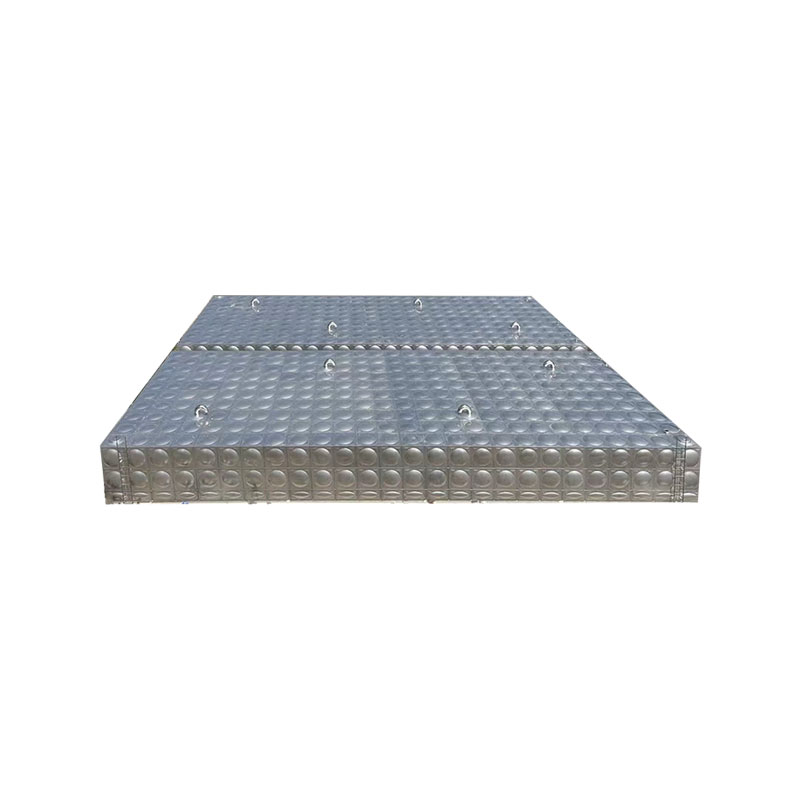
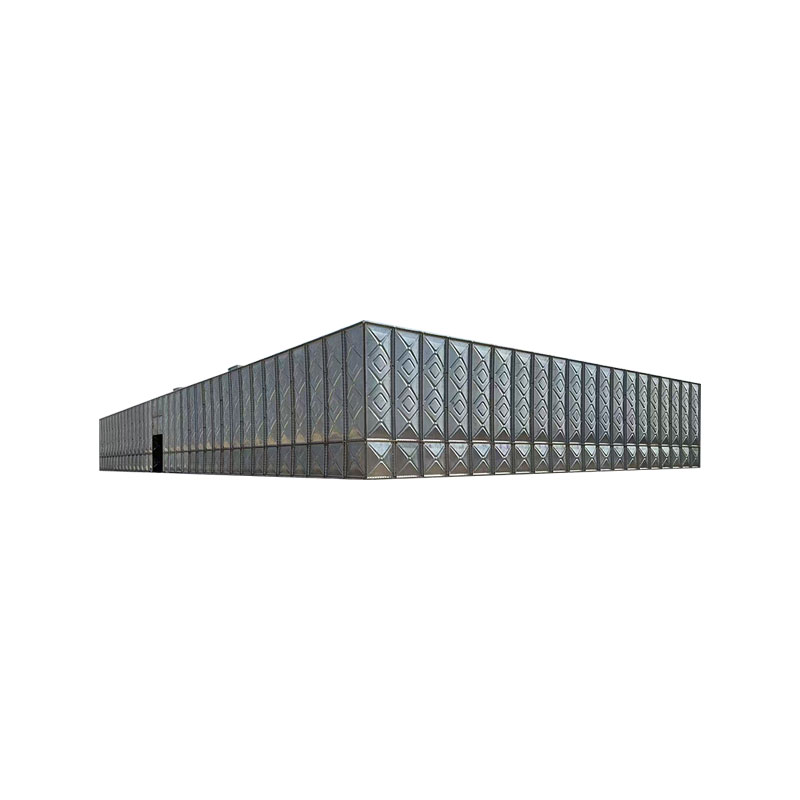
A stainless steel sectional water tank is a modular water storage system assembled on-site from pre-fabricated flat or curved stainless steel panels, bolted together with sealed joints to form a complete tank of virtually any required capacity. Unlike monolithic tanks that are manufactured as a single unit, sectional tanks can be built inside existing buildings, in confined plant rooms, or on rooftops where a one-piece tank cannot be delivered or installed. This modularity is the defining advantage of the sectional design, and it makes this type of stainless steel water storage tank the dominant choice for commercial, industrial, and municipal applications worldwide.
Standard panel sizes are typically 0.5 m × 0.5 m, 1 m × 1 m, or 1 m × 2 m, allowing tanks to be configured in capacities ranging from as little as 1,000 liters to well over 1,000,000 liters. The panels are manufactured from food-grade stainless steel — most commonly Grade 304 (18/8) or Grade 316 — with a typical sheet thickness of 1.2 mm to 3.0 mm depending on panel size and water head pressure.
Key Advantages of Stainless Steel Water Storage Tanks Over Other Materials
The choice of material for a water storage tank directly determines water quality, maintenance burden, service life, and total cost of ownership. Stainless steel consistently outperforms alternative materials across most of these dimensions, particularly in potable water applications.
Comparison of stainless steel water tanks against GRP, concrete, and polyethylene alternatives across key performance criteria
| Criterion |
Stainless Steel |
GRP / Fibreglass |
Concrete |
Polyethylene (HDPE) |
| Service life |
25–50+ years |
15–25 years |
30–50 years |
10–20 years |
| Potable water safety |
Excellent (inert, no leaching) |
Good (if lined) |
Moderate (alkalinity risk) |
Good (food-grade only) |
| Algae / bacterial growth |
Low (smooth, non-porous surface) |
Moderate |
High (porous surface) |
Low–Moderate |
| Modular / on-site assembly |
Yes (sectional panels) |
Yes (sectional panels) |
No (cast in place) |
No (single moulded unit) |
| Seismic / impact resistance |
Excellent |
Good |
Poor (brittle fracture) |
Good |
| Maintenance frequency |
Low |
Medium |
High |
Low–Medium |
| Initial cost |
Medium–High |
Medium |
Low–Medium |
Low |
The smooth, non-porous interior surface of a stainless steel water tank is particularly significant for potable water storage. Unlike concrete, which can harbor biofilm in surface pores, or GRP, which may degrade and release glass fibers over time, stainless steel presents a chemically inert surface that does not leach contaminants, support bacterial colonization, or impart taste or odor to stored water — even at elevated temperatures.
Grade 304 vs. Grade 316 Stainless Steel: Which Should You Specify?
The two most common stainless steel grades used in water tank manufacturing are AISI 304 and AISI 316. Selecting the correct grade for your application is a critical specification decision that affects both longevity and cost.
Grade 304 (18/8 Stainless Steel)
Grade 304 contains approximately 18% chromium and 8% nickel. It is the most widely used stainless steel for water storage tanks globally, offering excellent corrosion resistance in most freshwater environments, full compliance with food-contact regulations (including NSF/ANSI 61 and WRAS approval), and a favorable cost-to-performance ratio. It is suitable for:
- Potable water storage in urban and suburban water supply systems
- Rooftop and basement cold water storage in residential and commercial buildings
- Fire suppression water storage tanks
- Agricultural and irrigation water storage in non-saline environments
Grade 316 (Marine-Grade Stainless Steel)
Grade 316 adds 2–3% molybdenum to the 304 composition, which significantly enhances resistance to chloride-induced pitting and crevice corrosion. The premium over 304 is approximately 20–30% in material cost, but this is justified in:
- Coastal and marine environments where airborne chloride deposits are present
- Water supplies with elevated chloride concentrations (above 200 mg/L)
- Chemical process water, desalinated water, or brackish water storage
- Hot water storage applications above 60°C where 304 is more susceptible to stress corrosion cracking
For the vast majority of inland potable water storage applications, Grade 304 provides fully adequate performance and represents better value. Grade 316 should be reserved for environments where chloride exposure is a documented risk.
How a Stainless Steel Sectional Water Tank Is Assembled
Understanding the assembly process helps buyers specify the correct panel configuration, base frame, and ancillary fittings during procurement — and helps site managers plan installation logistics accurately.
- Base frame installation: A galvanized steel or stainless steel structural base frame is first installed on the prepared concrete pad or structural floor. The frame distributes the full water load and provides uniform support for the floor panels. Base frames are designed to accept forklift access for cleaning.
- Floor panel laying: Pressed stainless steel floor panels are laid on the base frame and bolted to it. Floor panels are typically heavier gauge than wall panels — commonly 2.0–3.0 mm thick — to handle the hydrostatic pressure of the full water column above.
- Wall panel erection: Wall panels are lifted into position and bolted panel-to-panel and panel-to-floor using stainless steel bolts. Each joint is sealed with a food-grade EPDM or NBR rubber gasket compressed between the panel flanges. No welding is required on site.
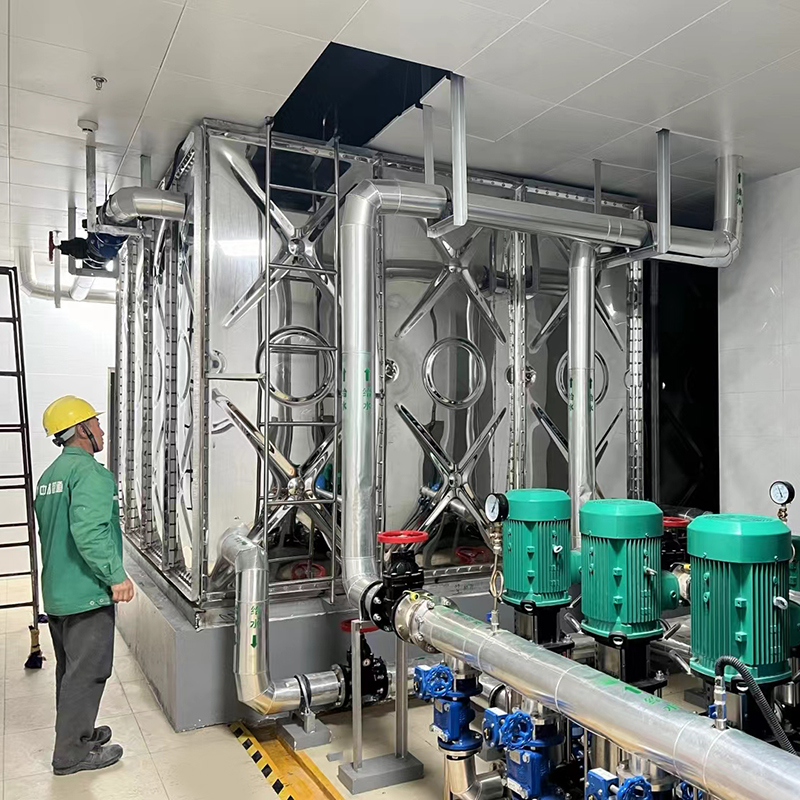
- Internal support structure: For larger tanks, stainless steel internal tie rods or pillar supports are installed at specified intervals to resist the outward hydrostatic pressure on wall panels. Tie rod spacing is calculated during engineering design based on tank height and panel thickness.
- Roof panel installation: Flat or pitched roof panels are bolted onto the top course of wall panels. Roof panels for potable water tanks include sealed manway access hatches (typically 600 mm × 600 mm) and vent connections fitted with insect-proof stainless steel mesh.
- Inlet, outlet, overflow, and drain fittings: All penetrations are pre-drilled in factory panels or field-drilled at specified locations. Connections are made using stainless steel flanged or threaded boss fittings sealed with EPDM gaskets.
- Water tightness test: The completed tank is filled with clean water and inspected for leaks at all joints and penetrations before being put into service. Any weeping joints are tightened; if leaks persist at panel gaskets, the affected gasket is replaced.
A typical 50,000-liter sectional tank (5 m × 5 m × 2 m) can be assembled by a two-person team in 1–2 working days once the base is prepared. Larger tanks of 500,000 liters or more may require 5–10 days and a small crane for panel handling.
Standard Specifications and Configurations
Stainless steel sectional water tanks are manufactured to internationally recognized standards. Specifying compliance with the relevant standard protects buyers against substandard products and ensures compatibility with national water regulations.
Key International Standards
- BS EN 13280:2001 — Specification for glass-fibre reinforced cisterns of one-piece and sectional construction (also referenced for equivalent sectional tank requirements in the UK)
- WRAS (Water Regulations Advisory Scheme) approval — Required in the UK for all materials and components in contact with potable water; panel material, gaskets, and coatings must all be listed
- NSF/ANSI 61 — The North American standard for drinking water system components; specifies maximum allowable extractable contaminant levels
- ISO 9001 — Quality management system certification for the manufacturing facility; indicates consistent production quality
- JIS G 4305 / GB/T 3280 — Japanese and Chinese national standards for cold-rolled stainless steel plate, widely referenced by Asian manufacturers
Common Panel and Tank Configurations
Typical panel sizes and corresponding standard tank capacity ranges for modular stainless steel sectional water tanks
| Panel Size |
Typical Panel Thickness |
Tank Capacity Range |
Typical Application |
| 0.5 m × 0.5 m |
1.2–1.5 mm |
1,000 – 10,000 L |
Residential, small commercial |
| 1 m × 1 m |
1.5–2.0 mm |
5,000 – 200,000 L |
Commercial buildings, hotels, hospitals |
| 1 m × 2 m |
2.0–3.0 mm |
50,000 – 1,000,000+ L |
Industrial, municipal, fire reserve |
Primary Applications of Stainless Steel Water Tanks
Stainless steel water storage tanks serve a wide range of sectors. Their combination of hygiene, durability, and flexibility means they are specified across vastly different industries and project scales.
Municipal and Utility Water Supply
Water utilities in Asia, the Middle East, and Africa extensively use stainless steel sectional tanks as elevated service reservoirs, ground-level buffer tanks, and emergency reserves. Capacities in municipal installations commonly range from 200,000 liters to over 2,000,000 liters, assembled from 1 m × 2 m panels. The ability to expand capacity by adding panels post-installation is a key planning advantage.
Commercial and High-Rise Buildings
Hotels, hospitals, shopping centers, and office towers require reliable cold water break tanks and hot water thermal store tanks in plant rooms. Stainless steel sectional tanks are the standard solution because they can be delivered in panels through standard doorways and assembled in basement plant rooms that no fabricated tank could enter. A typical 10-story hotel may use a 50,000–100,000-liter cold water break tank assembled from 1 m × 1 m panels.
Fire Suppression Systems
Sprinkler system and hydrant feed tanks are frequently specified in stainless steel to eliminate the corrosion risk that would compromise water quality and valve integrity in a steel tank. Fire reserve tanks must maintain a defined minimum volume at all times — typically 25,000 to 500,000 liters depending on the building classification — and the long service life of stainless steel minimizes the risk of tank failure compromising this reserve.
Food, Beverage, and Pharmaceutical Industries
Process water, ingredient water, and CIP (clean-in-place) rinse water storage for food and pharmaceutical production demand NSF/ANSI 61 or equivalent hygienic approval. Stainless steel 304 or 316 is the default specification, with internal welds ground smooth to Ra ≤ 0.8 µm surface finish in pharmaceutical applications to prevent biofilm accumulation.
Agricultural and Rural Water Supply
Irrigation buffer tanks, livestock watering reservoirs, and rural community water supply tanks benefit from the stainless steel tank's resistance to UV degradation (unlike HDPE), ability to be relocated and reassembled (unlike concrete), and freedom from the algae and sediment problems associated with open or poorly sealed tanks.
Critical Factors to Evaluate When Buying a Stainless Steel Sectional Water Tank
The market for stainless steel water tanks includes manufacturers of very different quality levels. A tank supplied with substandard panel thickness, non-compliant gasket materials, or inadequate structural design can fail within a few years — contaminating water supplies or causing structural collapse. Evaluate all of the following before committing to a supplier.
Panel Material Verification
- Request mill test certificates (MTCs) from the steel supplier for every batch of panels, confirming chemical composition (chromium, nickel, and molybdenum content for 316) and mechanical properties.
- Verify actual panel thickness with a calibrated ultrasonic thickness gauge on delivery — some suppliers reduce nominal thickness to cut material costs.
- Confirm the grade designation is embossed or laser-marked on the panels, as required by most quality standards.
Gasket and Sealant Compliance
- Gaskets must be manufactured from food-grade EPDM or NBR rubber approved under WRAS, NSF/ANSI 61, or equivalent. Non-compliant gaskets can leach plasticizers and support microbial growth.
- Request the gasket material specification and compliance certificate from the supplier before purchase.
Structural Engineering Documentation
- For tanks above 10,000 liters, the supplier should provide stamped structural calculations signed by a qualified engineer, confirming that the panel thickness, tie rod spacing, and base frame design are adequate for the specified water head and seismic zone.
- In earthquake-prone regions, verify that the tank design includes seismic restraint provisions per local building codes (e.g., IBC Chapter 15 in the USA, or IS 1893 in India).
Warranty and After-Sales Support
- Established manufacturers typically offer 10–25 year warranties on panel corrosion. Shorter warranties (under 5 years) may indicate lower material or manufacturing quality.
- Confirm spare gasket and bolt availability, and whether the manufacturer can supply replacement panels in the same configuration years after original installation.
Maintenance Requirements for Long Service Life
Stainless steel water storage tanks require significantly less maintenance than concrete or mild steel tanks, but they are not maintenance-free. A structured annual maintenance program protects water quality, maintains warranty validity, and ensures the tank operates as designed for its full service life.
Annual Inspection and Cleaning Protocol
- Drain and isolate the tank. Close inlet valve and open drain valve. Ensure a bypass supply is available to maintain downstream water supply during the maintenance window.
- Internal inspection: Enter via the access manway (using confined space entry procedures where applicable). Inspect all internal surfaces for pitting corrosion, biofilm, sediment accumulation, and gasket condition. Photograph any defects found.
- Clean internal surfaces with a solution of food-grade disinfectant (typically 50 mg/L free chlorine solution) applied by brush or spray. Rinse thoroughly with clean potable water until residual chlorine is below 0.5 mg/L.
- Check and re-torque all bolted joints if any visible weeping is found. Replace gaskets at any joint showing persistent leakage after re-torquing.
- Inspect external surfaces for rust staining from carbon steel contamination (e.g., from nearby structural steel), atmospheric corrosion at crevices, or damage to protective coatings on the base frame.
- Test all inlet, outlet, overflow, and float valve functions before refilling. Check vent mesh for blockage and insect ingress.
- Refill and take a water sample from the outlet after the tank has been in service for 24 hours. Test for total viable count, coliforms, and free chlorine residual per local water quality regulations.
In the UK, the Legionella risk assessment requirement under ACOP L8 means that cold water storage tanks must be cleaned and inspected at least annually, and more frequently if the risk assessment identifies elevated risk factors such as water temperatures above 20°C or low turnover rates.
Cost Overview: What Determines the Price of a Stainless Steel Water Tank
Stainless steel water tank pricing varies widely depending on capacity, steel grade, panel configuration, market region, and included accessories. Understanding the cost drivers allows buyers to make accurate budget provisions and evaluate supplier quotations critically.
- Capacity: The dominant cost factor. Price per liter of capacity generally decreases as tank size increases — a 100,000-liter tank typically costs less per liter than four 25,000-liter tanks.
- Steel grade: Grade 316 panels cost approximately 20–30% more than equivalent Grade 304 panels due to the molybdenum content.
- Panel thickness: Heavier gauge panels for high water head applications add material cost but are non-negotiable from a structural safety standpoint.
- Accessories: Insulation jackets, ball float valves, level indicators, overflow fittings, and manway covers all add to the supply cost but are typically required for a complete, code-compliant installation.
- Installation cost: Labour for assembly, civil works for the concrete base, and commissioning testing typically add 15–35% to the total project cost on top of the tank supply price.
As a general indicative benchmark, a Grade 304 sectional tank of 50,000 liters, supplied complete with base frame, fittings, and manway, typically costs in the range of USD 3,000 to USD 8,000 depending on the region of manufacture and delivery location. The same tank in Grade 316 or with enhanced thermal insulation would be priced at the upper end of this range or beyond. Always compare quotations on a like-for-like specification — panel grade, thickness, gasket compliance, and included accessories must be identical for a valid price comparison.



 Tiếng Việt
 عربى
عربى Get a quote

 Tel: +86 0515-86302568
  E-mail:
  Add: No. 11, Xingwang Road, Jianyang Town, Jianhu County, Jiangsu Province, China