Stainless Steel or GRP? The Short Answer
For most commercial, industrial, and long-term water storage applications, stainless steel sectional tanks are the superior choice. They offer a design life of 25–50+ years, require minimal maintenance, resist corrosion without coatings, and fully comply with WRAS and BS EN standards for potable water. GRP (Glass Reinforced Plastic) panel tanks are a cost-effective alternative for lower-budget projects and temporary installations, but they degrade faster, require regular inspection of joints and coatings, and are prone to UV-related discolouration and brittleness over time.
That said, the right choice depends on your budget, installation environment, water quality requirements, and expected service life. The sections below break down every key comparison factor.
What Is a Sectional Water Tank?
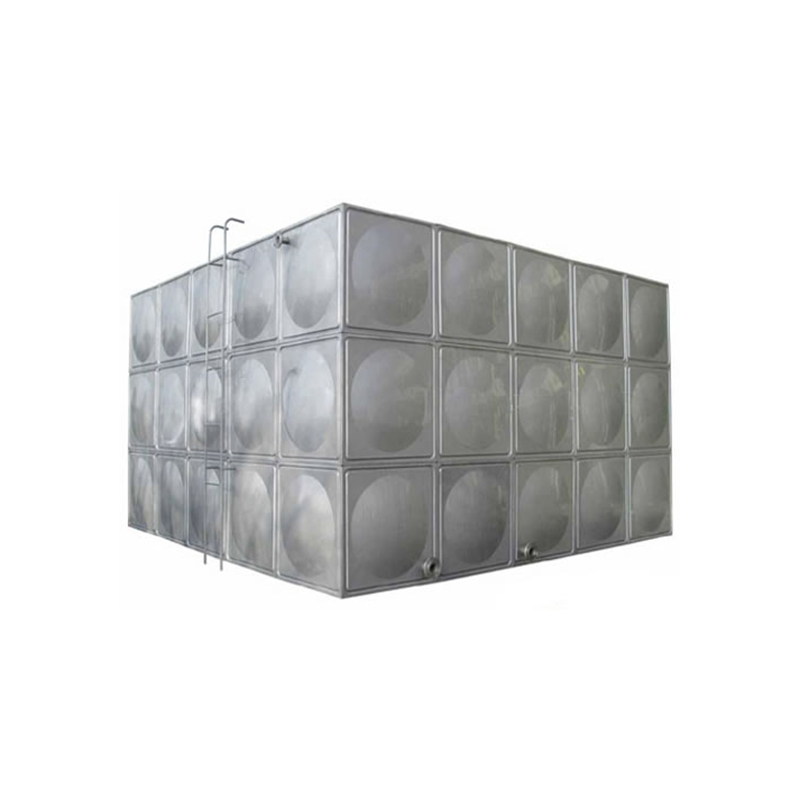
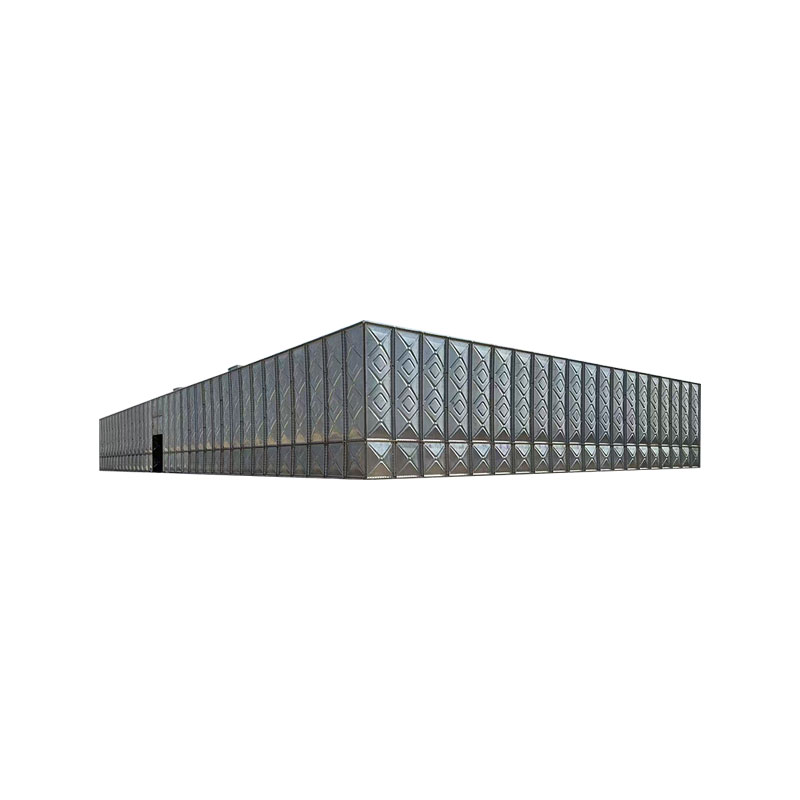
A sectional water tank is a modular storage tank assembled on-site from pre-fabricated panels. This design makes it possible to install large-capacity tanks in plant rooms, basements, and other confined spaces where a one-piece tank could never fit. Panels are typically bolted together with food-grade sealants, and the tank can be expanded or reconfigured over time.
Sectional tanks are widely used in commercial buildings, hospitals, hotels, manufacturing plants, fire suppression systems, and municipal water infrastructure. They are available in two dominant materials: stainless steel (most commonly Grade 304 or Grade 316) and GRP (fibreglass panels with a gel-coat inner surface).
Head-to-Head Comparison: Key Performance Factors
| Factor |
Stainless Steel Sectional Tank |
GRP Panel Tank |
| Design Life |
25–50+ years |
15–25 years |
| Material |
Grade 304 or Grade 316 stainless steel |
Glass Reinforced Plastic (fibreglass) |
| Corrosion Resistance |
Excellent (no lining needed) |
Good (gel-coat can degrade) |
| Hygiene / Potable Water |
Excellent – WRAS approved |
Good – WRAS approved when new |
| Structural Strength |
High |
Moderate |
| UV Resistance |
Excellent |
Poor (degrades without UV protection) |
| Weight |
Heavier |
Lighter – easier to handle |
| Initial Cost |
Higher (typically 20–40% more than GRP) |
Lower |
| Whole-Life Cost |
Lower (less maintenance, longer life) |
Higher (re-lining, earlier replacement) |
| Maintenance Required |
Low |
Moderate to High |
| Temperature Range |
-196°C to 800°C |
Approx. -20°C to 60°C |
| Recyclability |
Fully recyclable |
Difficult to recycle |
Table 1: Side-by-side comparison of stainless steel sectional tanks vs GRP panel tanks across key performance criteria.
Material Grade: Why Grade 304 vs Grade 316 Matters
Not all stainless steel sectional water tanks are the same. The two most common grades used in tank manufacture are Grade 304 and Grade 316, and selecting the correct grade is critical depending on your water chemistry and installation environment.
Grade 304 Stainless Steel
Grade 304 is the standard choice for most potable water storage applications. It contains 18% chromium and 8% nickel, which provides excellent general corrosion resistance. It is suitable for cold and mildly warm water in low-chloride environments and is the most widely specified grade for commercial buildings, schools, and hotels. Typical panel thickness ranges from 1.2 mm to 2.5 mm depending on tank size and water pressure.
Grade 316 Stainless Steel
Grade 316 adds 2–3% molybdenum to the alloy, significantly improving resistance to chloride-induced pitting corrosion. This makes it essential for coastal or marine environments, food processing facilities, chemical plants, or any installation where water chloride levels exceed 200 mg/L. While Grade 316 carries a 10–15% cost premium over Grade 304, it is indispensable in aggressive environments.
Lifespan and Whole-Life Cost Analysis
Initial purchase price is only one part of the cost equation. When evaluated over a 30-year service period, stainless steel sectional tanks typically deliver a lower total cost of ownership, despite the higher upfront investment.
Consider a hypothetical 50,000-litre tank installation:
- A GRP panel tank may cost £12,000–£18,000 to supply and install, but gel-coat re-lining (required every 10–15 years) adds £4,000–£8,000 per cycle, and the tank may need full replacement at year 20–25, adding further capital expenditure.
- A stainless steel sectional water tank of equivalent capacity may cost £18,000–£26,000 to install, but requires only routine cleaning and inspection with no re-lining and a design life extending beyond 40 years.
- Over 30 years, the stainless steel option can save 20–35% in total lifecycle costs compared to GRP in many scenarios.
These figures will vary significantly by location, tank size, water quality, and maintenance frequency. Always request a detailed whole-life cost analysis from your supplier before making a final decision.
Hygiene, Water Quality, and Regulatory Compliance
For potable water storage, hygiene is non-negotiable. Both tank types can achieve WRAS (Water Regulations Advisory Scheme) approval, but the two materials behave very differently over time.
Stainless Steel Sectional Tank Hygiene Advantages
- The smooth, non-porous internal surface inhibits biofilm formation and bacterial growth, including Legionella pneumophila.
- No internal coatings or gel-coats that can degrade and leach chemicals into the water supply.
- Retains WRAS approval throughout its service life without periodic re-approval cycles.
- Compliant with BS EN 12573 and relevant sections of the Water Supply (Water Quality) Regulations 2016 (England and Wales).
GRP Panel Tank Hygiene Considerations
- GRP tanks rely on a food-grade gel-coat inner surface for hygiene. Over time, this coating can crack, blister, or delaminate — particularly under UV exposure or thermal cycling — creating rough surfaces that harbour bacteria.
- Once the gel-coat degrades, the fibreglass substrate can absorb water and potentially allow styrene or other residual chemicals to leach into stored water.
- WRAS compliance may lapse if the internal surface condition deteriorates, requiring re-lining before continued use in potable water systems.
Installation, Modular Flexibility, and Capacity
One of the primary advantages of both tank types is their sectional, panel-based construction. Panels are typically 1 m × 1 m or 0.5 m × 0.5 m, allowing them to be carried through standard doorways (760 mm minimum) and assembled in situ. This is critical for plant rooms in existing buildings where access is restricted.
Typical available capacities range from 1,000 litres to over 1,000,000 litres, depending on panel configuration. Both stainless steel and GRP panel tanks can be configured in a wide range of footprints — single-compartment, twin-compartment (for maintenance without service interruption), or custom multi-cell arrangements.
Where Stainless Steel Has the Edge
- Higher structural rigidity allows larger unsupported panel spans, reducing the number of internal tie rods and making cleaning easier.
- Better suited to underground or partially submerged installations, where external soil or hydrostatic pressure demands greater structural strength.
- Tolerates a wider temperature range, making it suitable for hot water buffer vessels and process water at elevated temperatures.
Where GRP Has the Edge
- Panels are significantly lighter — typically 3–6 kg per panel versus 8–18 kg for equivalent stainless steel panels — reducing labour costs on difficult access sites.
- Lower upfront material cost makes GRP a viable option for budget-constrained projects with a shorter anticipated service life.
- GRP panels are inherently non-conductive, which can be advantageous in certain electrical or EMF-sensitive environments.
Maintenance Requirements: What to Expect Over the Tank's Life
Both stainless steel sectional tanks and GRP panel tanks require routine maintenance under the UK Water Supply (Water Fittings) Regulations and HSG274 Part 2 (Legionella control guidelines). However, the scope and cost of that maintenance differs substantially.
| Maintenance Task |
Stainless Steel Sectional Tank |
GRP Panel Tank |
| Annual inspection & cleaning |
Required |
Required |
| Joint sealant inspection |
Every 5–10 years |
Every 3–5 years |
| Internal surface re-lining |
Not required |
Every 10–15 years |
| UV degradation monitoring |
Not applicable |
Required for exposed installations |
| Panel crack or delamination check |
Not typically required |
Every 5 years |
| Legionella risk assessment |
Required |
Required |
Table 2: Comparison of ongoing maintenance requirements for stainless steel vs GRP sectional water tanks.
Environmental Impact and Sustainability
Sustainability credentials are increasingly important in building specification decisions, particularly under BREEAM assessments and Net Zero construction frameworks.
- Stainless steel is 100% recyclable at end of life, and approximately 80% of all stainless steel currently in use globally is made from recycled material. Its long service life also means fewer replacement cycles and less embodied carbon over time.
- GRP is a thermoset composite that is extremely difficult to recycle. End-of-life GRP panels most commonly go to landfill or incineration, both of which carry significant environmental penalties.
- For projects seeking BREEAM "Excellent" or "Outstanding" ratings, specifying a stainless steel sectional water tank typically scores better under the Materials and Waste categories than a GRP equivalent.
Typical Applications: Which Tank Type Fits Which Project?
Stainless Steel Sectional Tanks Are Best For:
- Hospitals, healthcare facilities, and pharmaceutical plants where water purity is critical and there is zero tolerance for contamination risk.
- Hotels, large commercial office buildings, and high-rise residential developments where long-term reliability and minimal maintenance downtime are priorities.
- Coastal and marine environments, or any location where water or ambient air has elevated chloride content (Grade 316 recommended).
- Underground installations and fire suppression tank applications requiring higher structural strength.
- Projects where a 40+ year asset life is required and whole-life cost is a key specification criterion.
GRP Panel Tanks Are Better Suited To:
- Budget-constrained projects where capital cost is the primary constraint and a 15–20 year service life is acceptable.
- Temporary installations, construction site water storage, or emergency water reserves.
- Sites with very restricted access where the lighter panel weight of GRP significantly reduces handling complexity and labour cost.
- Cold water cold storage in environments without UV exposure and with stable, low-chloride water supply.
Key Specifications to Check Before Purchasing a Sectional Water Tank
Regardless of which material you select, ensure your sectional water tank specification covers the following:
- WRAS approval — verify the tank and all fittings are listed on the WRAS approved products database for potable water use.
- Panel thickness — minimum 1.5 mm for stainless steel panels on tanks above 5,000 litres; thicker (2.0–2.5 mm) for higher-capacity or high-pressure applications.
- Insulation options — consider insulated panels (mineral wool or polyurethane foam core) if the tank is in an unheated environment or if Legionella temperature control is a concern.
- Access and inspection hatches — BS 6700 requires tanks to have a minimum 450 mm × 450 mm access hatch for inspection and cleaning.
- Float valve and overflow arrangements — specify ball float valves with inlet diffusers to prevent turbulence and sediment disturbance.
- Compartmentalisation — twin-compartment tanks allow one section to remain in service while the other is cleaned or inspected, which is essential for critical applications.
- Manufacturer warranty — reputable stainless steel sectional tank manufacturers offer 10–25 year structural warranties; GRP manufacturers typically offer 10–15 years.
Final Verdict: Which Should You Choose?
If your project demands long-term performance, potable water compliance, minimal maintenance, and the lowest whole-life cost, a stainless steel sectional water tank — particularly Grade 304 for standard applications or Grade 316 for aggressive environments — is the definitive choice. The higher capital cost is offset within 10–15 years through reduced maintenance spend and a significantly longer service life.
GRP panel tanks remain a legitimate option for projects with tight budgets, lighter access requirements, or shorter intended service lives. However, specifiers should account for re-lining costs and the risk of earlier replacement when projecting total spend over the building's lifetime.
In either case, always engage a qualified water storage specialist to conduct a full site survey, specify the correct capacity and configuration, and ensure compliance with current UK water regulations and Legionella risk management requirements.



 Tiếng Việt
 عربى
عربى Get a quote

 Tel: +86 0515-86302568
  E-mail:
  Add: No. 11, Xingwang Road, Jianyang Town, Jianhu County, Jiangsu Province, China