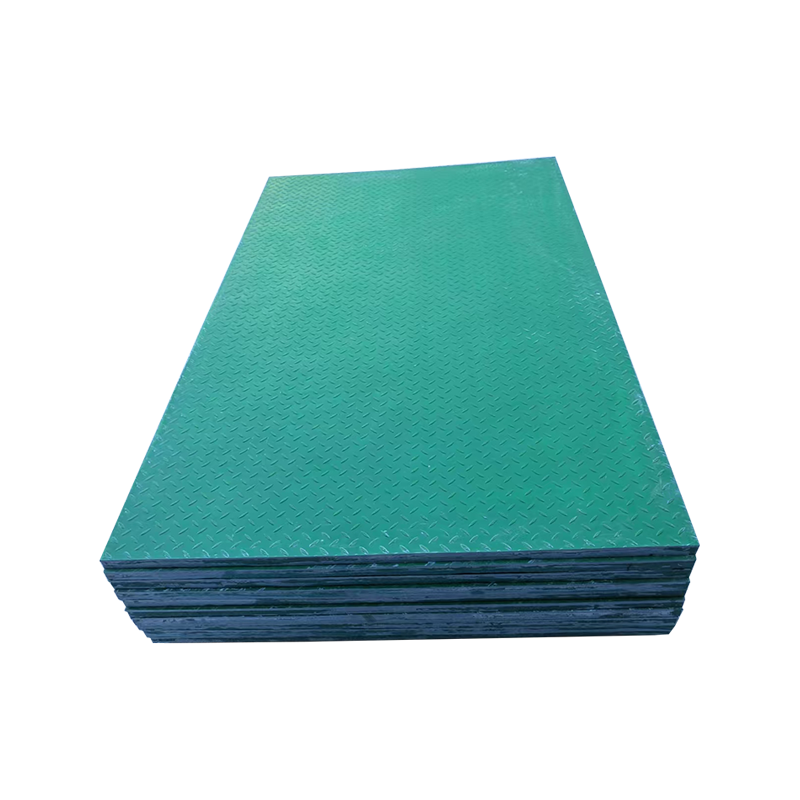
FRP grating (Fibre Reinforced Polymer grating) is a structural panel product made by combining fiberglass reinforcement with a polymer resin matrix, forming a rigid, open-grid platform used for walkways, floors, and drainage covers. It is the go-to alternative to steel, aluminium, and timber grating in environments where corrosion resistance, light weight, and electrical non-conductivity are critical requirements. FRP grating is widely used in chemical plants, water treatment facilities, offshore platforms, food processing factories, and marine structures.
This article explains what FRP grating is, how it is manufactured, the key differences between moulded and pultruded types, technical performance data, and how to select the right product for your application.
What Is FRP Grating: Definition and Core Composition
FRP stands for Fibre Reinforced Polymer — a composite material in which glass fibres (or occasionally carbon fibres) are embedded within a thermosetting resin such as polyester, vinyl ester, or phenolic resin. The resulting material combines the tensile strength of glass fibre with the chemical resistance and mouldability of the resin binder.
FRP grating specifically refers to panels manufactured in an open-grid or mesh configuration, providing a load-bearing platform while allowing liquids, air, and light to pass through the openings. The grid structure is composed of interlocking or continuous bearing bars and cross bars, forming a repeating pattern of square or rectangular apertures.
Key material properties that define FRP grating include:
- Corrosion resistance — unaffected by acids, alkalis, salts, and most solvents
- Low weight — typically 70–80% lighter than equivalent steel grating
- Electrical non-conductivity — a critical safety advantage in electrical substations and HV environments
- Thermal non-conductivity — low thermal bridging compared to metal alternatives
- Non-magnetic properties — required in MRI facilities, defence installations, and sensitive instrumentation environments
- Anti-slip surface — grit surface finish achieves a coefficient of friction exceeding 0.8 in most products
FRP Moulded Grating vs Pultruded Grating: Key Differences
FRP grating is produced by two fundamentally different manufacturing processes — moulding and pultrusion — each resulting in distinct structural characteristics, load capacities, and suitable applications. Understanding the difference is essential before specifying or purchasing.
FRP moulded grating is manufactured by laying continuous glass fibre rovings in a woven pattern through a pre-formed mould, then saturating the fibres with resin and curing them under heat and pressure. Because the fibres run continuously in both the longitudinal and transverse directions, moulded grating has equal strength in both axes — it is a bi-directional product.
Typical characteristics of FRP moulded grating:
- Panel sizes typically up to 1,220 × 3,660 mm (4 ft × 12 ft)
- Available depths from 25 mm to 50 mm, with 38 mm the most common structural depth
- Mesh apertures of 38 × 38 mm or 50 × 50 mm as standard
- Can be cut in any direction without structural loss — a major installation advantage
- Weight typically 4.5–7.5 kg/m² depending on depth and resin system
Pultruded FRP Grating
Pultruded FRP grating is assembled from individually pultruded bearing bars (produced by pulling continuous fibres through a resin bath and die) and cross-rods inserted at regular intervals. Because fibres run exclusively along the length of each bar, pultruded grating is anisotropic — significantly stronger in the longitudinal direction and must be oriented with bearing bars spanning the load direction.
Pultruded grating is the preferred choice where higher load capacities or greater panel depths (up to 100 mm) are required.
Table 1: Comparison of FRP moulded grating and pultruded FRP grating across key performance parameters
| Parameter |
FRP Moulded Grating |
Pultruded FRP Grating |
| Strength Direction |
Bi-directional (equal) |
Uni-directional (longitudinal) |
| Load Capacity |
Moderate |
High |
| Available Depths |
25–50 mm |
25–100 mm |
| Cutting Flexibility |
Any direction |
Parallel to bearing bars only |
| Typical Weight (kg/m²) |
4.5–7.5 |
6.0–14.0 |
| Best Application |
Walkways, platforms, drainage covers |
Heavy-duty floors, vehicle decking, long spans |
| Cost |
Lower |
Higher |
How FRP Moulded Grating Is Manufactured
The moulded grating manufacturing process is a continuous hand lay-up and machine-assisted moulding operation that determines the final structural and chemical performance of the product. Understanding the process helps specifiers evaluate product quality claims and compare offerings from different manufacturers.
- Mould preparation — A steel mould with the desired grid pattern is cleaned and treated with a release agent to prevent adhesion.
- Resin gel coat application — A surface-rich resin layer (often containing UV stabilisers or fire retardants) is applied to the mould surface. This becomes the outer skin of the finished panel.
- Fibre roving lay-up — Continuous glass fibre rovings are woven through the mould grid in an alternating over-under pattern, building up multiple layers in both directions until the required thickness is achieved.
- Resin impregnation — Catalysed resin (polyester, vinyl ester, or phenolic) is poured over and worked through the fibre lay-up to achieve full saturation with minimal void content.
- Curing — The mould is closed and the panel cures under controlled temperature conditions, typically for 60–120 minutes depending on resin system and ambient temperature.
- Demoulding and finishing — The cured panel is removed, trimmed to standard dimensions, and a grit or concave anti-slip surface is applied to the top face.
The glass fibre content of a well-manufactured FRP moulded grating panel is typically 35–45% by weight. Higher fibre content produces stronger, stiffer panels but also increases material cost. Quality manufacturers provide third-party test certificates confirming fibre content, flexural strength, and resin type.
FRP Grating vs Steel Grating: A Direct Performance Comparison
The decision between FRP grating and galvanised or stainless steel grating is primarily driven by the operating environment, life-cycle cost, and weight constraints. FRP is not universally superior — in certain applications, steel remains the better choice. The table below provides a direct comparison across the parameters that matter most.
Table 2: FRP grating compared to galvanised steel grating and stainless steel grating across operational criteria
| Criterion |
FRP Grating |
Galvanised Steel |
Stainless Steel |
| Weight (kg/m²) |
4.5–7.5 |
20–35 |
22–38 |
| Corrosion Resistance |
Excellent |
Moderate (zinc depletes) |
Good (chloride risk) |
| Electrical Conductivity |
Non-conductive |
Conductive |
Conductive |
| Load Capacity |
Moderate–High |
Very High |
Very High |
| Maintenance Cost |
Very Low |
Moderate (repainting) |
Low |
| Initial Material Cost |
Moderate–High |
Low |
High |
| Fire Performance |
FR grades available (Class 1) |
Non-combustible |
Non-combustible |
| Service Life (corrosive env.) |
25–40 years |
5–15 years |
15–25 years |
In corrosive chemical or marine environments, FRP grating typically delivers a lower total cost of ownership over 20 years despite its higher initial price, because it eliminates repainting, re-galvanising, and premature replacement costs associated with steel.
Resin Systems Used in Fiberglass Grates and Their Chemical Resistance
The resin matrix is the primary determinant of the chemical resistance profile of any FRP grating product. Selecting the wrong resin for the operating chemical environment is one of the most common and costly specification errors. The three main resin systems are:
Isophthalic Polyester Resin
The most widely used and lowest-cost resin system. Isophthalic polyester provides good resistance to dilute acids, alkalis, and common industrial chemicals. It is suitable for general industrial walkways, water treatment platforms, and mild chemical environments. It is not recommended for concentrated acids, chlorinated solvents, or continuous immersion in aggressive chemicals.
Vinyl Ester Resin
Vinyl ester resin delivers significantly higher chemical resistance than polyester, particularly against concentrated acids (including sulphuric acid up to 70%), alkalis, bleach, and many solvents. It is the standard choice for chemical processing plants, electroplating facilities, pulp and paper mills, and offshore oil and gas platforms. Vinyl ester grating costs approximately 20–35% more than polyester equivalents.
Phenolic Resin
Phenolic FRP grating offers the highest fire performance of any FRP system, achieving Class 0 / Class 1 fire spread ratings and very low smoke emission — a critical requirement in offshore, rail, and tunnel applications where fire safety standards (such as IMO FTP Code for marine use) must be met. Phenolic grating is more brittle and more expensive than vinyl ester but is irreplaceable where fire performance certification is mandatory.
Table 3: Chemical resistance summary for the three main FRP grating resin systems
| Chemical / Environment |
Isophthalic Polyester |
Vinyl Ester |
Phenolic |
| Dilute acids (pH 2–5) |
Good |
Excellent |
Good |
| Concentrated acids |
Poor |
Good |
Moderate |
| Alkalis / caustic soda |
Moderate |
Good |
Moderate |
| Salt water / marine |
Good |
Excellent |
Good |
| Solvents / hydrocarbons |
Poor–Moderate |
Moderate–Good |
Moderate |
| Fire / flame spread |
FR grade available (Class 2) |
FR grade available (Class 1) |
Class 0 achievable |
Standard Sizes, Load Tables, and Span Ratings for FRP Moulded Grating
FRP moulded grating is produced in standardised panel sizes and depths. The most common industry standard panel is 1,220 mm × 3,660 mm (4 ft × 12 ft), though 1,000 mm × 4,000 mm panels are also widely available in European markets. Specifiers should confirm the available panel size with their supplier before finalising structural grid spacings, as beam spacings should align with panel dimensions to minimise waste from cutting.
Depth and Load Capacity
Panel depth is the primary variable governing load capacity and maximum allowable span. The following are typical load ratings for isophthalic polyester moulded grating with a 38 mm aperture pattern, based on a maximum deflection criterion of span/200 (the most commonly applied serviceability limit):
Table 4: Indicative load and span data for FRP moulded grating at span/200 deflection limit (pedestrian load)
| Panel Depth (mm) |
Max Span (mm) |
Safe UDL (kN/m²) |
Typical Application |
| 25 mm |
600 |
2.5 |
Light-duty covers, trench covers |
| 38 mm |
900 |
5.0 |
General pedestrian walkways |
| 50 mm |
1,200 |
7.5 |
Industrial platforms, stair treads |
Always obtain load tables specific to the product from the manufacturer. Load capacity varies with resin system, fibre content, and mesh aperture — generic data should not be used for structural design without verification.
Primary Industries and Applications for FRP Grating and Fiberglass Grates
FRP grating is specified across a wide range of industries, but its adoption is strongest in sectors where corrosion resistance, safety, and weight savings deliver measurable operational value.
Chemical and Petrochemical Processing
Chemical plants use vinyl ester FRP grating for access platforms, bund walkways, pipe bridges, and tank surrounds where acid splashes, solvent vapours, and aggressive cleaning chemicals would rapidly degrade steel. A typical chemical plant replacement project substituting steel grating with FRP across 2,000 m² of platform area has been shown to reduce maintenance expenditure by over 60% across a 10-year period.
Water and Wastewater Treatment
FRP moulded grating is the standard material for walkways over aeration tanks, filter beds, and clarifier bridges at water treatment works. The combination of high humidity, hydrogen sulphide gas (a by-product of sewage treatment), and chlorinated water creates an environment that destroys galvanised steel within 5–8 years. FRP grating remains structurally unaffected and requires no painting or protective coating throughout its service life.
Offshore and Marine
Offshore oil and gas platforms use phenolic FRP grating in areas requiring IMO fire performance certification, and vinyl ester grating in less critical zones. The weight saving of FRP grating versus steel is particularly valuable on topsides structures, where reduced deck loads directly reduce structural steel requirements in the hull and jacket. A weight saving of 15–20 tonnes of grating on a medium-sized platform translates to a structural steel saving of 40–60 tonnes.
Food and Beverage Processing
Fiberglass grates are widely used in meat processing, fish processing, breweries, and dairy plants where floors and walkways are continuously washed down with hot water and caustic cleaning agents. FRP grating does not rust, does not harbour bacteria in surface pits (unlike corroded steel), and is approved for use in food contact zones under relevant hygiene regulations. White or light grey gel coat finishes also make contamination visually detectable.
Power Generation and Electrical Substations
FRP grating's electrical non-conductivity makes it the mandatory choice for cable trenches, substation floors, and transformer bund walkways. Working on or near high-voltage equipment from a non-conductive platform removes a critical electrocution pathway. FRP grating used in these applications must meet IEC 61111 or equivalent dielectric standards and is routinely tested to voltages exceeding 30 kV.
How to Specify and Select the Right FRP Grating Product
Specifying FRP grating requires decisions across five interrelated parameters. Optimising for only one — such as cost — without considering the others frequently results in early product failure or safety non-compliance.
- Manufacturing method — Moulded for bi-directional loading and ease of cutting; pultruded for high loads and long spans.
- Resin system — Polyester for general use; vinyl ester for chemical resistance; phenolic for fire performance.
- Panel depth — Determined by structural span and applied load. Use manufacturer load tables and apply a minimum factor of safety of 2.0 on ultimate load values for pedestrian applications.
- Mesh aperture — Smaller apertures (25 × 25 mm) provide greater foot support and prevent small items falling through; larger apertures (50 × 50 mm) offer better drainage and are lighter.
- Surface finish — Grit top (highest slip resistance, CoF > 0.8), concave top (good drainage, moderate slip resistance), or covered top (solid surface for specific containment requirements).
For projects in the UK, FRP grating installed as a workplace floor or walkway must comply with the Workplace (Health, Safety and Welfare) Regulations 1992 requirements for floor surfaces and the structural loading requirements of BS EN 1991-1-1 (Eurocode 1) for imposed loads on floors and walkways.
Installation, Fixing, and Cutting FRP Grating on Site
FRP grating can be installed with basic tools and without heavy lifting equipment, which is one of its practical advantages over steel grating in remote or elevated locations. The following points cover the key installation considerations:
Cutting
FRP moulded grating can be cut using a diamond-tipped circular saw blade or an abrasive disc at 3,500–4,500 RPM. Cutting generates fine glass fibre dust — operatives must wear FFP3 dust masks, safety glasses, and long-sleeved clothing. After cutting, all exposed edges should be sealed with the manufacturer's compatible edge sealant or catalysed resin to prevent moisture ingress into the cut fibre ends.
Fixing and Fasteners
FRP grating is fixed to support structures using proprietary FRP or stainless steel clip systems that engage the bearing bars. Standard M8 or M10 stainless steel bolts with large-diameter washers are used for through-fixing where clips are not suitable. Never use mild steel or galvanised fasteners with FRP grating in corrosive environments — fastener corrosion will create staining, panel movement, and eventual structural loosening well before the FRP panel itself deteriorates.
Thermal Expansion
FRP has a coefficient of thermal expansion of approximately 20–25 × 10⁻⁶ /°C — roughly double that of steel. For long panel runs in exposed outdoor installations, expansion gaps of 3–5 mm per metre of panel length should be incorporated to prevent panel buckling in high summer temperatures.



 Tiếng Việt
 عربى
عربى Get a quote

 Tel: +86 0515-86302568
  E-mail:
  Add: No. 11, Xingwang Road, Jianyang Town, Jianhu County, Jiangsu Province, China