When it comes to industrial liquid storage, selecting the right material is more than just a budgetary decision—it is a critical safety and operational requirement. In the modern chemical processing, water treatment, and manufacturing sectors, two materials dominate the market: Fiberglass Reinforced Plastic (FRP) and High-Density Polyethylene (HDPE).
Both materials offer excellent corrosion resistance compared to traditional carbon steel, but they perform very differently under stress, temperature fluctuations, and specific chemical exposures. This article provides a detailed comparison to help you determine whether FRP chemical storage tanks or HDPE alternatives are the better fit for your specific needs.
Understanding the Basics: What are FRP and HDPE?
Before diving into the technical comparison, it is essential to understand how these two materials are constructed.
What is an FRP Chemical Tank?
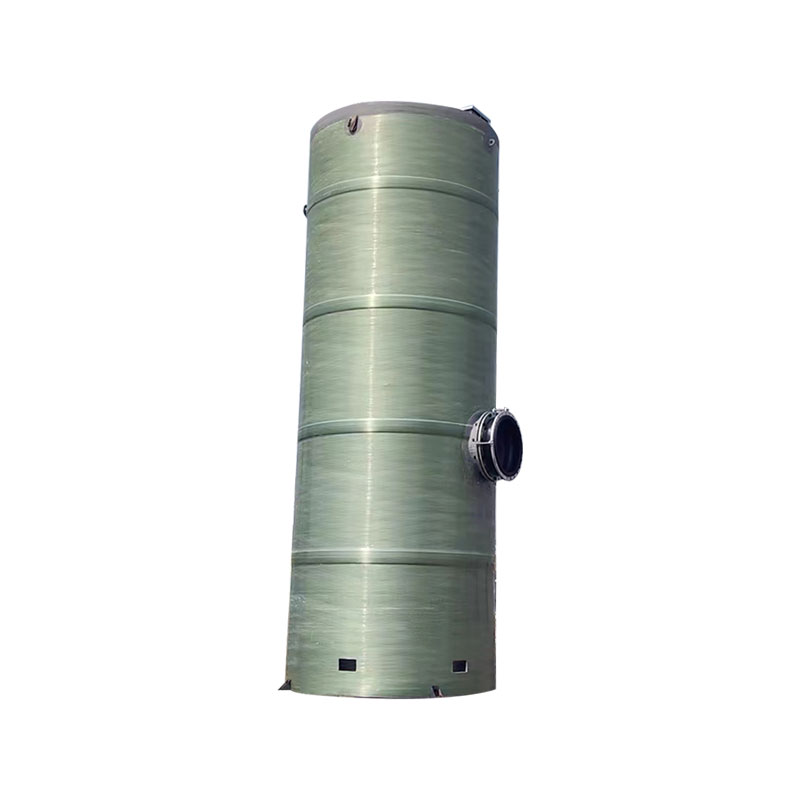
An FRP chemical tank is a composite structure. It consists of a resin matrix (such as vinyl ester or polyester) reinforced with glass fibers. The manufacturing process often involves "filament winding," where glass strands are saturated with resin and wound onto a rotating mandrel. This creates a high-strength, structural "sandwich" that can be engineered to handle specific pressures and chemicals.
What is an HDPE Tank?
HDPE stands for High-Density Polyethylene. These tanks are made from a thermoplastic resin. They are typically manufactured through a process called rotational molding (rotomolding), where polyethylene resin is melted inside a heated mold and rotated to create a seamless, one-piece tank.
Key Comparison Factors
Structural Strength and Pressure Handling
One of the most significant differences between these two materials lies in their mechanical properties.
FRP chemical storage tanks are categorized as "structural" materials. Because they are reinforced with glass fibers, they possess incredible dimensional stability. They do not sag or deform easily under the weight of heavy liquids or internal pressure. If your application involves vacuum conditions or high-pressure agitation, FRP is almost always the superior choice.
HDPE, being a thermoplastic, is much softer. Over time, HDPE tanks can experience "creep"—a slow deformation caused by constant stress. While HDPE is excellent for atmospheric storage of lighter liquids, it lacks the structural "backbone" required for large-scale, high-pressure industrial processes.
Chemical Compatibility
Both materials are famous for resisting corrosion, which is why they have largely replaced stainless steel in many chemical plants.
- HDPE is highly resistant to many acids and bases. However, it can be vulnerable to certain hydrocarbons and strong oxidizing agents like highly concentrated nitric acid or sodium hypochlorite over long periods.
- FRP chemical tanks offer a broader range of compatibility because the resin can be "custom-tailored." By choosing a specific vinyl ester resin, manufacturers can create a tank specifically designed to hold aggressive oxidizers or high-temperature solvents that would melt or degrade an HDPE tank.
Temperature Resistance
Temperature is often the "deal-breaker" in the FRP vs. HDPE debate.
- HDPE Tanks: Most HDPE tanks have a maximum operating temperature of around 120°F to 140°F (49°C to 60°C). Beyond this, the material softens significantly, risking structural failure.
- FRP Tanks: Because FRP is a "thermoset" material (it doesn't melt once cured), it can handle much higher temperatures. Depending on the resin used, an FRP chemical storage tank can safely operate at temperatures exceeding 200°F (93°C) and, in specialized cases, even higher.
Customization and Size
If you need a tank that isn't a standard "cookie-cutter" shape, FRP wins hands down.
- HDPE is limited by the size of the molds available in the rotomolding process. While large HDPE tanks exist, they are generally restricted to standard cylindrical shapes.
- FRP is highly customizable. Need a specific diameter to fit through a narrow doorway? Need specialized manways, internal baffles, or unique nozzle orientations? FRP manufacturers can hand-lay or wind these tanks to your exact blueprints. Furthermore, for massive storage requirements (over 50,000 gallons), FRP is the only viable non-metallic option as it can be fabricated in sections or on-site.
Cost Analysis: Short-term vs. Long-term
It is no secret that HDPE tanks have a lower upfront purchase price. For small-scale storage of non-critical chemicals at ambient temperatures, HDPE is a very cost-effective solution.
However, when looking at the Total Cost of Ownership (TCO), the story changes.
- Lifespan: An HDPE tank typically lasts 10 to 15 years before the risk of stress cracking becomes too high.
- Longevity of FRP: A well-maintained FRP chemical tank can easily last 30 to 50 years.
When you factor in the cost of decommissioning an old tank, purchasing a new one, and the labor required for the swap every decade, the long-term investment in FRP often proves to be more economical.
Maintenance and Repairability
Accidents happen in industrial environments. A forklift might bump a tank, or a valve might fail.
- Repairing HDPE: Polyethylene is notoriously difficult to repair once it is damaged. "Plastic welding" is possible, but it rarely restores the tank to its original structural integrity. Often, a cracked HDPE tank must be scrapped.
- Repairing FRP: FRP is highly repairable. Much like a fiberglass boat, a damaged FRP chemical storage tank can be patched using glass mat and resin. These repairs bond chemically to the original structure, often making the repaired area as strong as the rest of the tank.
Summary Table: At a Glance
| Feature |
FRP (Fiberglass) |
HDPE (Polyethylene) |
| Material Type |
Thermoset Composite |
Thermoplastic |
| Max Temp |
High (Up to 200°F+) |
Low (Up to 140°F) |
| Structural Strength |
High (Reinforced) |
Moderate (Non-reinforced) |
| Customization |
Excellent / Custom Shapes |
Limited to Molds |
| Initial Cost |
Higher |
Lower |
| Expected Lifespan |
30-50 Years |
10-15 Years |
| Repairability |
Easy / Reliable |
Difficult |
Final Verdict: Which One Should You Choose?
Choose HDPE if:
- You are storing non-hazardous or mildly corrosive chemicals.
- The liquid is kept at ambient (room) temperature.
- You have a tight initial budget and the tank size is relatively small.
- You need a "plug-and-play" solution with standard dimensions.
Choose an FRP Chemical Storage Tank if:
- You are storing highly aggressive chemicals or oxidizers.
- The process involves high temperatures or pressure/vacuum changes.
- You require a large-scale storage capacity (thousands of gallons).
- You want a "set it and forget it" solution with a 30+ year lifespan.
- The tank needs to be customized to fit a specific footprint or mechanical requirement.
In the world of industrial infrastructure, the "cheapest" option today is rarely the cheapest option over twenty years. For critical applications where safety, durability, and reliability are non-negotiable, the FRP chemical tank remains the gold standard for engineers worldwide.



 Tiếng Việt
 عربى
عربى Get a quote

 Tel: +86 0515-86302568
  E-mail:
  Add: No. 11, Xingwang Road, Jianyang Town, Jianhu County, Jiangsu Province, China