A stainless steel sectional water tank is the most practical large-capacity water storage solution for buildings, industrial facilities, and infrastructure projects where a one-piece tank cannot be delivered or installed. Constructed from factory-pressed stainless steel panels — typically Grade 304 or Grade 316 — bolted together on-site with sealed joints, these tanks can be assembled in locations with restricted access, expanded in capacity without full replacement, and are expected to last 30–50 years with minimal maintenance. They are compliant with international drinking water standards and are used globally in hospitals, hotels, commercial buildings, water treatment plants, and fire suppression systems.
This guide covers everything required to specify, procure, install, and maintain a stainless steel sectional water tank correctly — from material grades and panel dimensions to installation procedures and regulatory compliance.
What Is a Stainless Steel Sectional Water Tank and How Is It Built
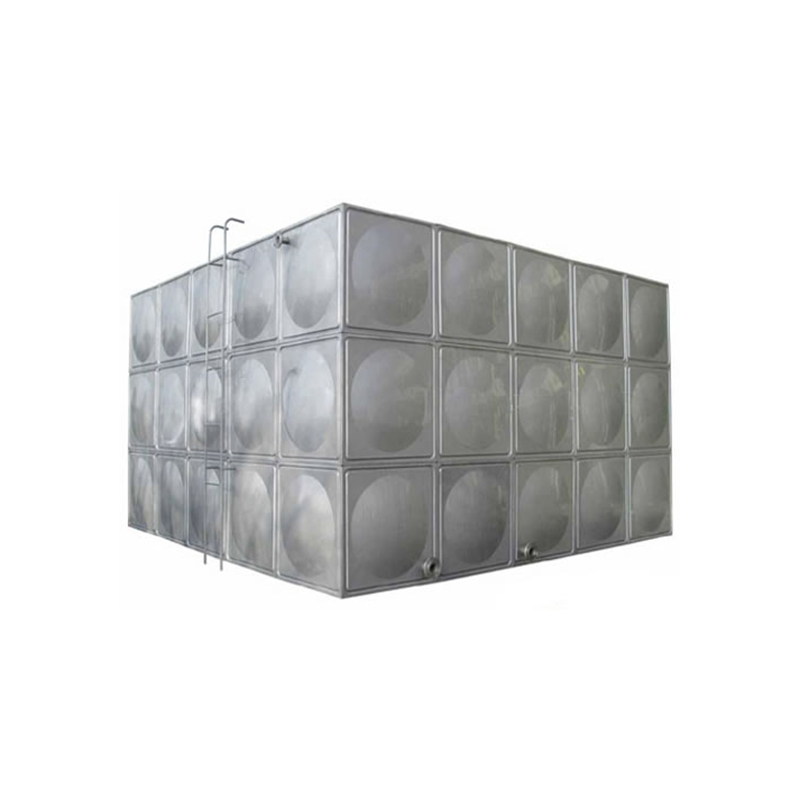
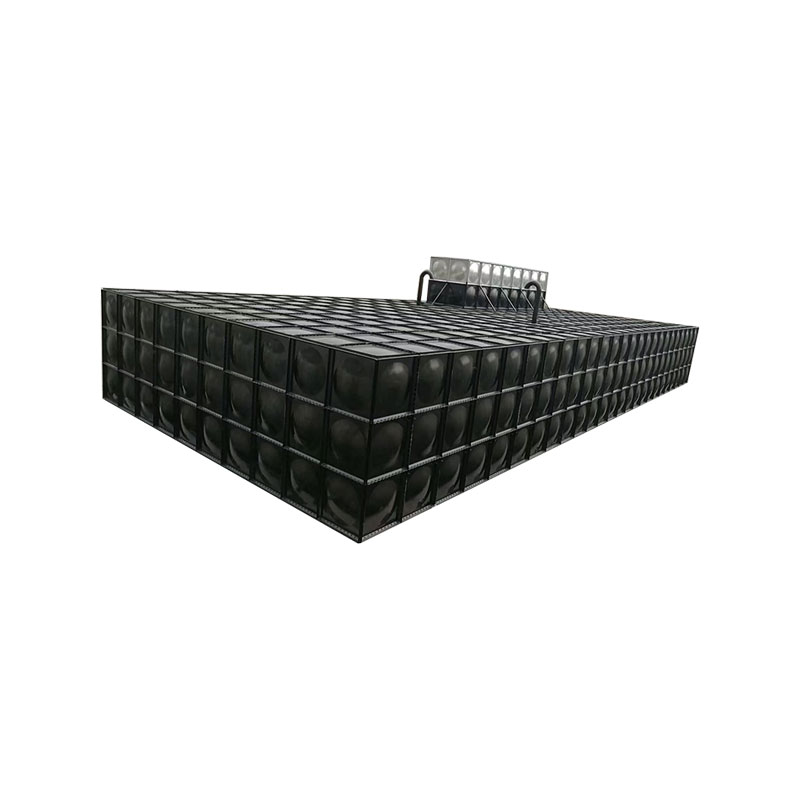
A stainless steel sectional water tank is assembled from individual flat or corrugated panels, each typically 1 m × 1 m in dimension, manufactured by cold-pressing stainless steel sheet to a formed profile. The corrugated or dimpled surface geometry of each panel provides structural rigidity without requiring thick material — most panels use 1.2–2.0 mm sheet thickness, with heavier gauges used for larger tanks or higher hydrostatic pressure zones.
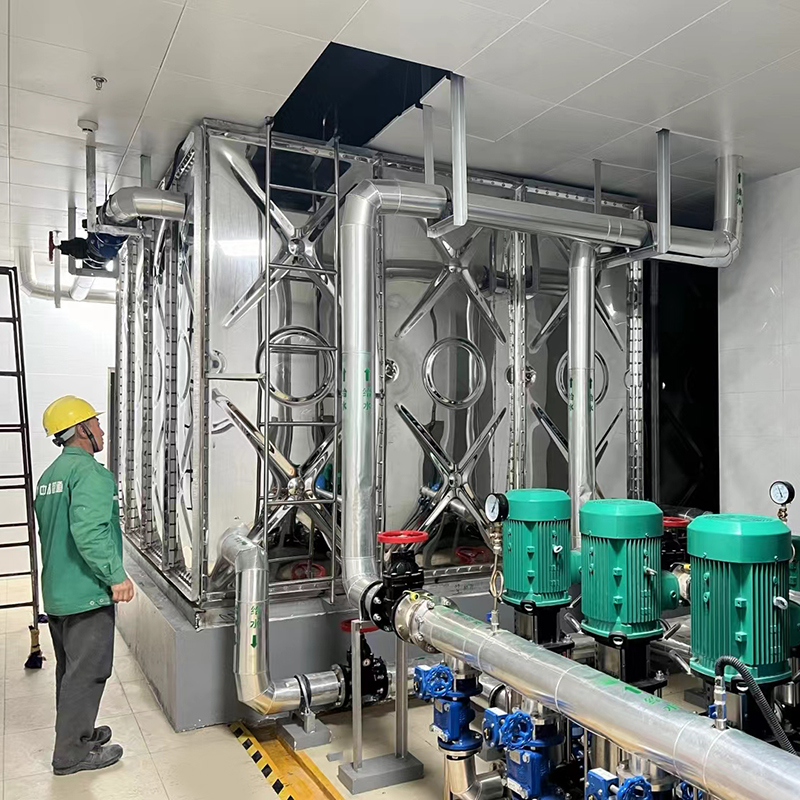
Panels are bolted together at flanged edges using stainless steel bolts, with food-grade EPDM (ethylene propylene diene monomer) or silicone rubber gaskets at every joint to ensure a watertight seal. The completed assembly sits on a steel or concrete support frame, and the tank is fitted with:
- Inlet, outlet, overflow, and drain connections in specified positions
- A manhole access cover (typically 600 × 600 mm) for internal inspection and cleaning
- Internal tie rods or pillar supports for tanks exceeding specified dimensions to resist hydrostatic wall deflection
- A vented cover panel system to prevent contamination while allowing pressure equalisation
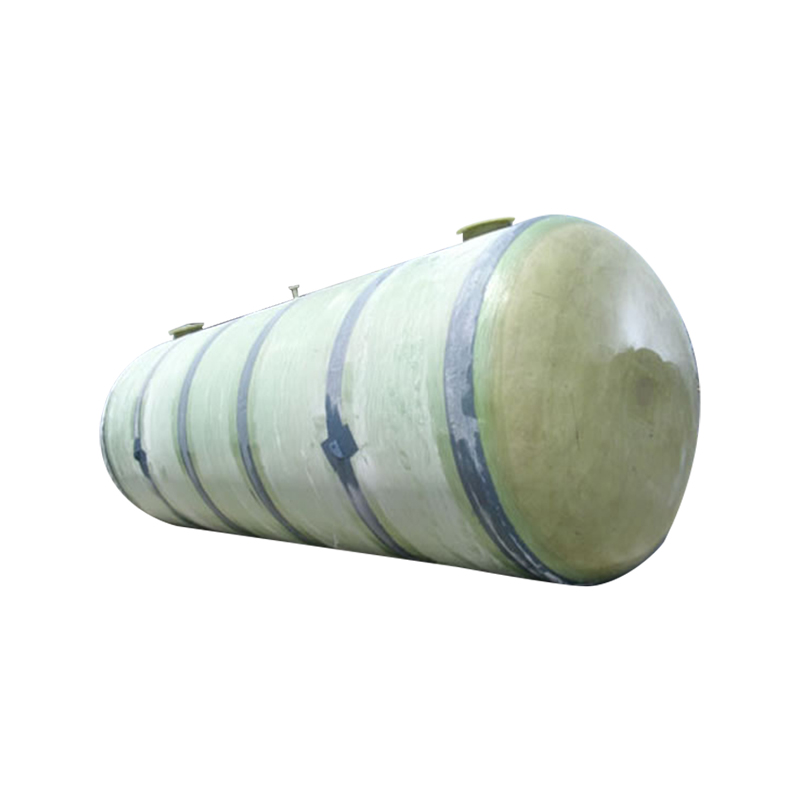
Because the tank is assembled panel by panel, it can be built through standard doorways, in plant rooms, on rooftops, or in basements — locations where a one-piece GRP or polyethylene tank could never reach. Standard capacities range from 1,000 litres to over 1,000,000 litres, with any intermediate size achievable by adjusting panel count.
Material Grades: 304 vs 316 Stainless Steel
The choice of stainless steel grade is the most consequential material decision in specifying a sectional water tank. The two grades used are AISI 304 (EN 1.4301) and AISI 316 (EN 1.4401), and the difference is not simply a quality upgrade — it is a corrosion resistance question that depends on water chemistry and environment.
Comparison of Grade 304 and Grade 316 stainless steel for sectional water tank applications
| Property |
Grade 304 |
Grade 316 |
| Chromium content |
18% |
16–18% |
| Nickel content |
8–10% |
10–14% |
| Molybdenum content |
None |
2–3% |
| Chloride resistance |
Moderate (susceptible above ~200 ppm Cl⁻) |
High (suitable for brackish/coastal environments) |
| Typical application |
Municipal water, low-chloride supply |
Coastal areas, high-chloride supply, seawater |
| Relative material cost |
Base (lower) |
Approximately 20–30% higher |
For most inland municipal water supply applications with chloride content below 200 mg/L, Grade 304 is adequate and represents the most cost-effective specification. Where the supply water has elevated chloride, the tank is located in a coastal or industrial atmosphere, or where the stored water may be treated with higher chlorine dosing, Grade 316 is the correct specification. Using Grade 304 in high-chloride conditions leads to pitting corrosion that is not immediately visible but progressively undermines structural integrity.
Standard Capacities and Panel Configurations
Stainless steel sectional water tanks are sized by specifying the number of panels in the length, width, and height dimensions. Since standard panels are 1 m × 1 m, the tank dimensions are directly calculated from panel count, making capacity planning straightforward.
Common configurations and their nominal capacities:
Example configurations and nominal capacities for standard 1 m × 1 m panel stainless steel sectional tanks
| L × W × H (panels) |
Dimensions (m) |
Nominal Capacity |
Typical Application |
| 2 × 1 × 1 |
2.0 × 1.0 × 1.0 |
2,000 L |
Small commercial building |
| 3 × 2 × 2 |
3.0 × 2.0 × 2.0 |
12,000 L |
Mid-size office or hotel |
| 5 × 3 × 3 |
5.0 × 3.0 × 3.0 |
45,000 L |
Hospital, large hotel |
| 10 × 5 × 4 |
10.0 × 5.0 × 4.0 |
200,000 L |
Industrial facility, water treatment |
| Custom |
Any dimension |
Up to 1,000,000+ L |
Municipal reservoir, firefighting reserve |
For tanks exceeding 3 metres in height or where wall panel span exceeds structural limits, internal support columns (pillars) or horizontal tie rods are required. The manufacturer's structural calculation should specify the pillar arrangement based on the hydrostatic load at each panel row.
Site Preparation and Foundation Requirements
Correct site preparation is critical. A stainless steel sectional water tank filled with water exerts significant load on its support structure — a 50,000-litre tank weighs approximately 50 tonnes when full. Foundation or structural floor failure is one of the most serious installation risks and is entirely preventable with correct specification.
Ground-Level Installation
For outdoor or ground-floor tanks, a reinforced concrete slab is the standard foundation. The slab must:
- Be level to within ±5 mm across the full base area — unlevel bases cause panel joint stress and seal failure
- Have a minimum thickness of 150 mm for tanks up to 50,000 L, increasing with tank size and soil bearing capacity
- Extend at least 300 mm beyond the tank perimeter on all sides to accommodate the support frame footprint
- Be cured for a minimum of 28 days before tank installation and loading
Rooftop and Elevated Installation
For rooftop plant rooms, the structural engineer must verify that the roof or floor slab can carry the full water load plus the tank structure weight. A structural survey is mandatory before installation. The tank support frame must distribute load to the building's structural grid — point-loading on non-structural slabs is a common cause of serious structural incidents.
Support Frame
The support frame is typically fabricated from hot-dip galvanised steel or stainless steel channel sections. It elevates the tank base panel 150–300 mm above the floor, allowing access for inspection of the base panels, drainage connections, and overflow management. The frame must be level before the first panels are installed — shimming with stainless steel packs is the standard method for fine adjustment.
Step-by-Step Installation Process
Stainless steel sectional water tanks are designed for assembly by two to four workers without specialist lifting equipment for standard panel sizes. The following sequence applies to a typical rectangular tank:
- Install and level the support frame — check level in both axes to within ±5 mm; grout or shim as required; confirm all anchor points are secured to the structural base
- Lay the base panels — starting from one corner, fit base panels onto the frame, inserting EPDM gaskets at all panel-to-panel joints; do not fully tighten bolts until all base panels are positioned to allow minor adjustment
- Erect the corner panels — corner panels define the tank geometry; these are installed first at each level to establish the structural reference for wall panels
- Install wall panels row by row — work systematically from base to top, inserting gaskets at every joint, checking vertical alignment with a spirit level at each row; internal tie rods or pillar supports are installed at specified intervals as construction proceeds
- Fit connection panels — panels with pre-drilled ports for inlet, outlet, overflow, drain, and level control connections are positioned as specified in the design drawing; all connections are made with BSP or flanged stainless fittings
- Install roof panels — roof panels include the manhole access panel and vent arrangement; the vent must be fitted with a fine insect-proof mesh (maximum 0.6 mm aperture) to prevent contamination ingress
- Final bolt tightening — torque all bolts to the manufacturer's specified value using a calibrated torque wrench; over-tightening extrudes gasket material and causes leaks; under-tightening allows seepage
- Hydraulic pressure test — fill the tank to overflow level and inspect all joints for seepage for a minimum of 24 hours; mark and re-gasket any weeping joints, then re-test
- Disinfection before commissioning — clean, disinfect, and flush the tank per BS 8558 / WHO guidelines before connecting to the potable water supply (see maintenance section)
Connections, Fittings, and Accessories
A properly specified stainless steel sectional water tank requires a complete set of connections and accessories. Omitting or incorrectly sizing any element creates operational or water quality problems.
Essential Connections
- Inlet connection with ball valve or float valve — sized to achieve refill of daily demand within 4–8 hours to prevent stagnation; float valve prevents overfill
- Outlet connection — positioned 50–100 mm above the base panel to prevent sediment entrainment; sized for peak demand flow rate
- Overflow connection — set at maximum water level; typically one pipe size larger than the inlet to prevent overflow water backing up; must discharge to a visible tundish or open drain to signal overflow events
- Drain connection — located at the lowest point of the base; sized at minimum DN50 for effective tank emptying during cleaning
- Warning pipe — set 25 mm below the overflow level; provides early warning of float valve failure before overflow occurs
Recommended Accessories
- Electronic level sensor and BMS connection — enables remote monitoring of water level, pump control, and alarm for low-level or overflow conditions
- Thermometer pocket or temperature sensor — water temperature should be monitored; temperatures above 20°C increase Legionella risk in cold water storage tanks
- UV disinfection unit on the outlet — provides an additional barrier against bacterial contamination without residual chemical taste
- Compartmentalisation (split tank design) — dividing the tank into two equal compartments allows one section to be isolated for cleaning while the other remains in service; strongly recommended for critical supply applications
Capacity Sizing: How to Calculate the Right Tank Volume
Undersizing a tank causes supply interruption; oversizing causes water to stagnate, increasing bacterial risk and chlorine dissipation. The correct approach is to balance suppl



 Tiếng Việt
 عربى
عربى Get a quote

 Tel: +86 0515-86302568
  E-mail:
  Add: No. 11, Xingwang Road, Jianyang Town, Jianhu County, Jiangsu Province, China